




This Content Is Only For Subscribers
If you have ever watched a new tenant sign a long lease, collect the keys, and say, “I think I have it,” you probably know what comes next. They do not have all of it. Nobody does after a stack of signatures, utility transfers, moving boxes, and trying to remember which key opens the side gate.
Welcome back to “Ask a Property Manager.” This month we are talking about one of the most useful half hours in a tenancy: the lease walkthrough. Not the signing itself. I mean the conversation where you explain how the home and your systems actually work before the first misunderstanding has a chance to turn into a problem.
A lease is the agreement. It sets the terms and gives both sides something to return to if there is a disagreement. But even a well written lease is not the same thing as an orientation. A tenant can sign every page and still be unsure how you want maintenance reported, what counts as a long term guest, or whether they need approval before mounting a television.
That is why I like a simple walkthrough. You do not need to read the lease aloud. You need to explain the handful of rules and routines that affect everyday life, answer the questions that come up, and make sure the tenant knows what to do when they are unsure.
The Lease Is Not a Pop Quiz
The first thing I would change is the mindset. A lease walkthrough is not a test of whether the tenant read every clause. If you treat it that way, the tenant will spend the conversation trying not to look confused.
Most tenants are not planning to break rules. They make assumptions. A cousin staying for a few weeks turns into a few months. A small dog arrives before anyone asks. A slow leak is ignored because it is only filling a bowl under the sink. Those choices may conflict with the lease or create property risk, but they often start with ordinary confusion rather than bad intent.
Your job is to replace as much of that guessing as possible. Explain the rule. Explain the practical reason when it helps. Then tell the tenant what to do if their situation does not fit neatly into the example you gave.

Start With Rent and Communication
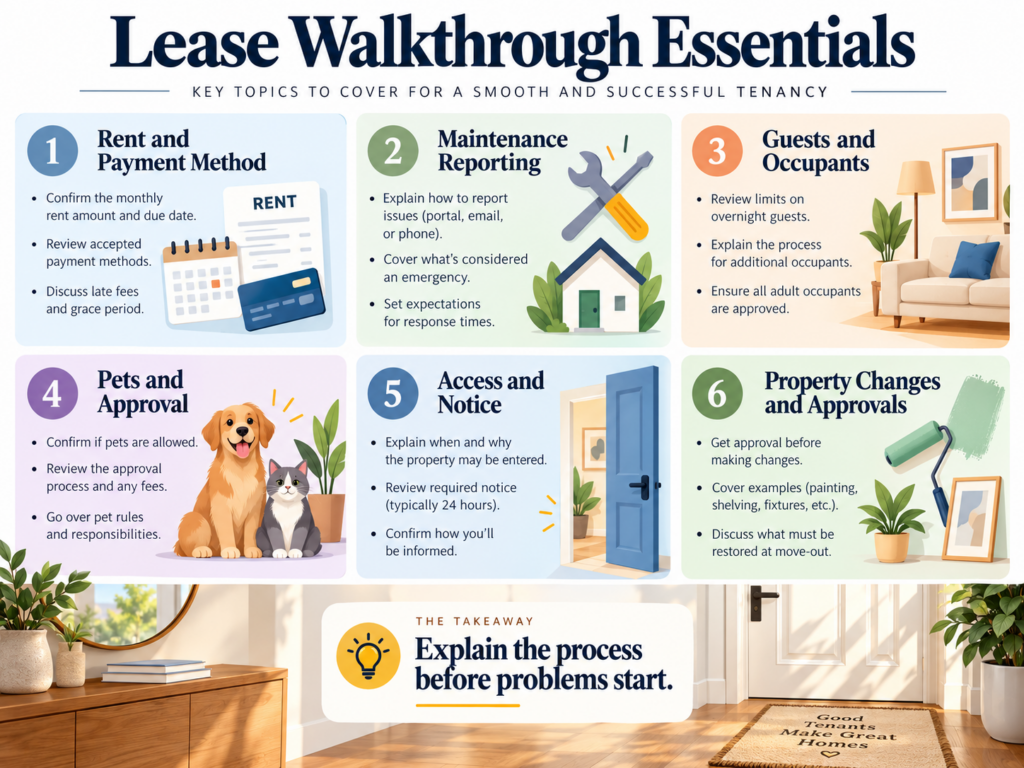
Rent is an easy place to begin because every tenant needs the information. Cover the due date, approved payment method, and any grace period or late fee that applies under the lease. Show them where payment goes instead of assuming a tenant who rented before will understand your system.
Then explain how to contact you. If routine questions should go by email, say so. If maintenance has a portal or form, show the tenant how to use it. If you keep normal business hours for routine matters, give them those hours.
I also explain that an urgent condition should not get lost because the tenant picked the wrong communication channel. You can have a preferred system and still tell tenants what to do when water is running, they smell gas, or another serious condition needs immediate attention. The system is there to make communication easier, not to create a technicality.
Make Maintenance Concrete
Maintenance is where a good walkthrough can save real money. A tenant does not need to know how to repair an HVAC system or diagnose plumbing. They do need to know what you want reported and what information helps you respond.
In San Antonio and South Texas, I would spend extra time on cooling, water, irrigation, and storms. Long stretches of summer heat put HVAC systems under heavy use. A weak system, water around an indoor unit, or a blocked condensate drain deserves an early report. So does a plumbing leak, irrigation that will not shut off, or water intrusion after a storm.
Ask the tenant to tell you where the problem is, when they first noticed it, whether it is actively getting worse, and whether they can safely send a photo. That turns “the AC is broken” into information a vendor can actually use.
Show them where routine requests go. Then give a few examples of conditions that deserve a faster call. Do not try to create a list for every possible emergency. You are teaching judgment and a process.
Explain the House, Not Just the Lease
This is the part many landlords skip. You are standing in the house, so use the house. Show the tenant where the air filter is located and what the lease expects regarding replacement. Point out the main water shutoff if it is accessible and safe to use. Explain the irrigation controller if lawn care is part of the tenant’s responsibility.
If the property has a gate, HOA parking rules, a community pool, special trash collection, or a septic system, cover the practical part while you can point to it. In some South Texas homes, mineral buildup is something tenants may notice on fixtures or appliances. Tell them what is normal and what you want reported.
I also like to explain seasonal expectations. Before a hard freeze, you may send instructions that are specific to the property. During prolonged summer heat, you may remind tenants not to block returns and to report cooling changes early. After a strong storm, you may ask them to look for obvious water intrusion without climbing on a roof or doing anything unsafe.
Talk Through Guests, Occupants, and Animals
These topics create conflict because real life does not always fit a neat example. A tenant may think a partner who stays most nights is still only a guest. A family member may need a temporary place to stay. The landlord sees a possible additional occupant while the tenant sees an ordinary family situation.
Keep the conversation neutral. Explain how the lease handles guests and additional occupants and tell the tenant to ask before someone begins using the property as their regular residence. The goal is not to judge who they invite over. The goal is to keep the tenancy information accurate and avoid surprises.
Do the same with animals. If the tenant wants to add a pet later, explain the approval process before the animal arrives. If they raise an assistance animal request, handle that through the appropriate process rather than assuming the normal pet rules answer the question.
Clarify Changes to the Property
Tenants want a rental to feel like home. I do not think the answer is to make them afraid to hang a picture. The better approach is to explain which changes require approval and why.
Mounting a television, painting, installing shelves, replacing fixtures, adding locks, changing landscaping, or attaching equipment to the home can create damage or restoration work. Tell the tenant to ask first if they are not sure. A quick question now is much easier than arguing over repairs at move out.
Make Access and Privacy Predictable
Landlord access is another area where expectations matter. Tenants want privacy, and landlords still need to coordinate repairs, inspections, preventive maintenance, appraisals, and other visits allowed by the lease.
Explain how you normally request a nonurgent visit under your lease, how much notice you generally try to provide, and whether a vendor may contact the tenant directly for scheduling. Also explain that an active leak, fire risk, or similar urgent condition may require a different response.
For properties spread between San Antonio, New Braunfels, Seguin, Boerne, Pleasanton, or other surrounding communities, vendor scheduling can involve travel and changing arrival windows. I would rather explain that at move in than have a tenant assume every plumber or HVAC technician will arrive at an exact minute.
Do Not Rush the Move In Condition Record
The move in condition form often gets handed over at the worst possible time. The tenant is surrounded by boxes, so the form sits on a counter until somebody remembers it later.
Take a few minutes to explain why it matters. It is a shared record of the property’s condition at the beginning of the tenancy. Tell the tenant to note conditions they want documented, take useful photos, and return the form according to the instructions you provide.
If they report something that needs repair, move it into your maintenance process rather than assuming the condition form alone will handle it. If they are documenting an old scuff or worn surface, keep that with the move in record. The point is to create a clear baseline while everyone is calm.
Give the Tenant a One Page Reference
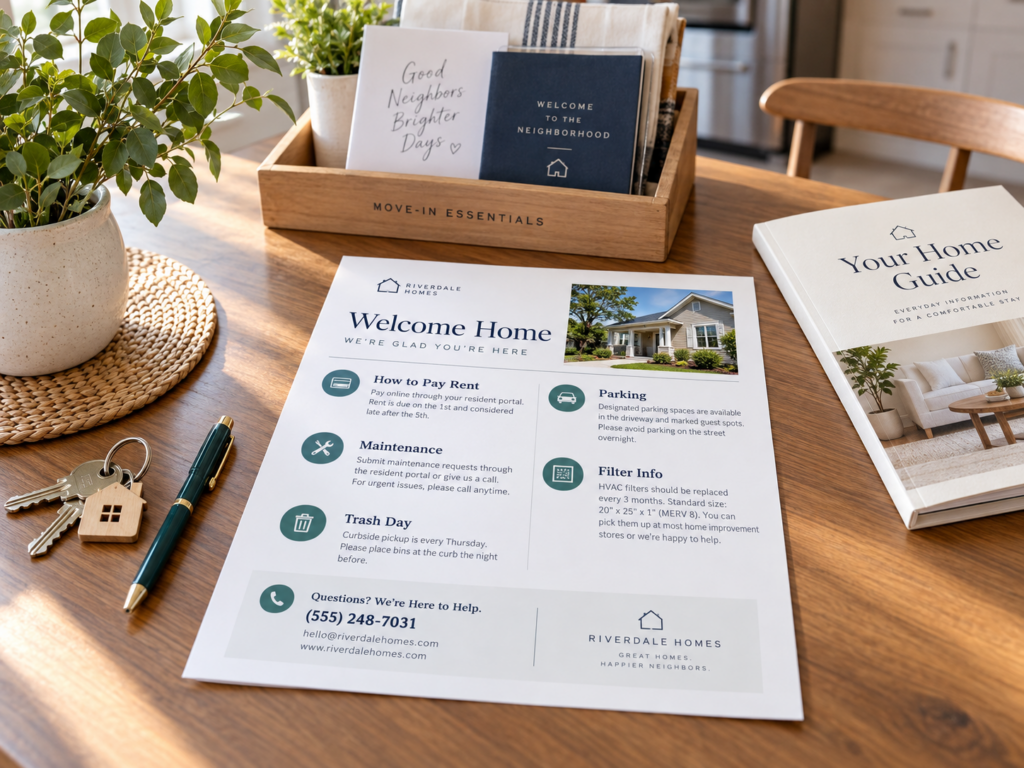
A tenant will not remember the full walkthrough, and that is fine. Give them a welcome sheet or move in guide with the information they are most likely to need again: contact information, maintenance instructions, rent payment method, trash day, parking, filter details, and any property specific reminders.
Keep it short. If the welcome sheet becomes another lease, it stops being useful. I want a tenant to be able to look at one page and know where to start.
Ask a Better Final Question
At the end of the walkthrough, I would not stop with “Any questions?” Most people will say no because they want to finish moving. Ask something more useful: “What part of this do you think will be hardest to remember?” or “Is there anything about the house or our process that you are still unsure about?”
You may learn that the tenant is worried about repair appointments because of their work schedule. They may not understand the portal. They may have a family member who visits often and want to know how the guest rule works. Those are much easier conversations before move in than three months later.
What I Want a Tenant to Leave Knowing
A successful lease walkthrough does not end with a tenant memorizing the agreement. It ends with them knowing how to succeed in the home. They know how to pay, how to report a problem, when to ask for approval, how you handle communication, and where to look when they forget something.
That kind of clarity does not make you sound strict. It makes you predictable. In my experience, predictable landlords get fewer avoidable surprises because tenants understand the process before they are frustrated, rushed, or worried.
Take the extra time at move in. Explain the parts that matter in plain language. Let the tenant ask the awkward questions while the relationship is still calm. You are not trying to eliminate every future problem. You are making sure the first response to a problem is not, “I did not know.” That is time well spent for the tenant, the landlord, and the house.