




This Content Is Only For Subscribers
A small landlord does not need a corporate work order department, but every landlord needs a reliable way to keep a repair request from disappearing. When you own a few houses, maintenance often arrives as a text while you are driving, a voicemail during dinner, or a quick comment when you are already at the property for something else. The problem is not that the landlord does not care. The problem is that memory is a terrible maintenance system.
Welcome back to Maintenance Matters. For San Antonio and South Texas landlords, a good repair request system has to work during long cooling seasons, sudden thunderstorms, hard water problems in many areas, irrigation issues, and the occasional hard freeze. It also has to be simple enough that you will still use it when three things break in the same week. The goal is not to create paperwork. It is to make sure the right repair gets the right response and actually gets finished.

Step One: Give Repairs One Primary Home
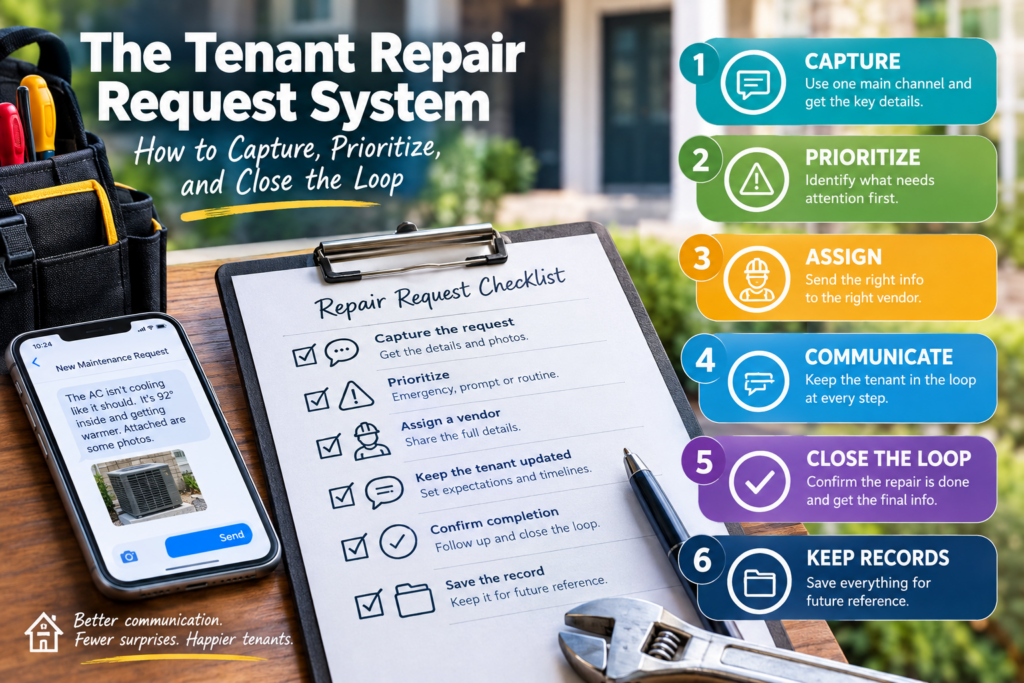
Start by choosing one primary place for routine maintenance requests. That might be a dedicated email address, an online form, or a maintenance feature inside property management software. The specific tool matters less than consistency. What you are trying to avoid is a repair history scattered across text messages, personal email, voicemail, and notes on your desk.
Tell tenants at move in how to report routine repairs and keep the instructions easy to find. If a tenant texts about a dripping faucet, you can acknowledge the message and ask them to submit it through the normal maintenance channel so the details and photos stay with the property record.
Emergencies are different. If water is actively flooding the house or the tenant smells gas, the system should not become a barrier to action. Handle the immediate condition first. Once the property is stable, make sure the request, phone call, photos, and response are added to the maintenance record. A primary channel is useful because it organizes information, not because it gives the landlord permission to ignore information that arrives somewhere else.
Step Two: Capture Enough Information the First Time
A useful repair request should answer the questions your vendor is going to ask anyway. Which property? Where in the house? What is happening? When did it start? Is it getting worse? Is there water, an unusual smell, a strange sound, loss of power, or another related symptom? Can the tenant attach a photo? Are there access issues such as pets, gates, or unusual work hours?
Do not ask tenants to diagnose the cause. A tenant who writes that the upstairs bathroom ceiling has a growing brown stain after rain is giving you useful information. A tenant who guesses that the roof flashing is bad may be right or may not. Their job is to describe the change. Your job is to decide who needs to inspect it.
This matters in South Texas because small clues can change the whole response. Water near an air handler can point to a condensate issue even if the house is still cooling. Mineral buildup around a valve can hide a slow seep. A sprinkler line that runs too long near the slab may be more important than the tenant realizes. Better intake leads to better triage.
Step Three: Triage by Consequence
Once the request is captured, decide how fast it needs attention. A simple three level system works well for a small portfolio: immediate, prompt, and routine. The labels matter less than using them consistently.
Immediate problems involve active danger or active damage. Water flowing from a broken pipe, sewage entering the living area, a serious electrical condition, a strong gas odor, or another condition that can hurt someone or rapidly damage the house belongs at the top of the list. Follow emergency and utility instructions where appropriate and take reasonable steps to stop ongoing damage while the right professional is on the way.
Cooling failures require judgment rather than a blanket rule. A complete air conditioning failure during an extreme San Antonio heat event can become serious quickly, especially when indoor temperatures are rising or vulnerable occupants are involved. A weak vent in one room on a mild day is a different situation. Look at the actual conditions, not just the equipment label.
Prompt repairs are the problems that are not immediate emergencies but are likely to get worse if they sit. A slow leak, failed refrigerator, garage door that will not secure, water around indoor HVAC equipment, or repeated irrigation leak may fall here. Routine repairs are items such as loose hardware, screens, minor cosmetic defects, or small adjustments that can usually wait for a normal service visit.
Step Four: Hand the Vendor a Complete Job
A vendor should not have to reconstruct the repair from three separate tenant messages. Send the property address, tenant contact information if appropriate, the exact location of the problem, the tenant’s description, photos, access notes, and any spending limit you use for approval.
If you manage homes across San Antonio, New Braunfels, Seguin, Boerne, Pleasanton, or farther into South Texas, route planning matters. A vendor who knows the issue and has the right photo before leaving town has a better chance of bringing the correct parts on the first trip. That can save more time than any complicated software feature.
Set expectations about scheduling too. Decide whether the vendor contacts the tenant directly or whether you coordinate the appointment. Either can work. What creates problems is when the tenant thinks the vendor is calling, the vendor thinks you are scheduling, and nobody confirms the visit.
Step Five: Keep Communication Moving During Delays
The maintenance system should tell you when a request is waiting on a part, a quote, a vendor, or tenant access. That waiting stage is where landlords often lose track of a repair. Add a next action date to every open request. If the plumber says the valve will arrive Friday, put Friday on the calendar. If the roofer cannot inspect until after a storm system clears, note when you will check back.
Update the tenant before they have to chase you. You do not need to write a long explanation. Tell them what changed, what you are doing next, and when they will hear from you again. During the hottest part of summer, HVAC companies may be booked heavily across the San Antonio area. After a strong storm, roofers and fence contractors may face the same problem. A delay is easier to manage when the tenant knows the request is still active.
Step Six: Close the Loop
Do not close a maintenance request just because the invoice arrived. Follow up with the tenant and confirm that the original problem appears resolved. A simple message asking whether the leak has stopped, the house is cooling normally, or the gate is closing correctly is usually enough.
If the tenant says the problem remains, reopen the request immediately. If everything is working, mark it complete, record the cost, and file the invoice. For weather dependent repairs, add a future check when needed. A roof patch may need another look after the next heavy rain. Drainage work may need a real storm before you know whether it solved the problem.
Step Seven: Use the History
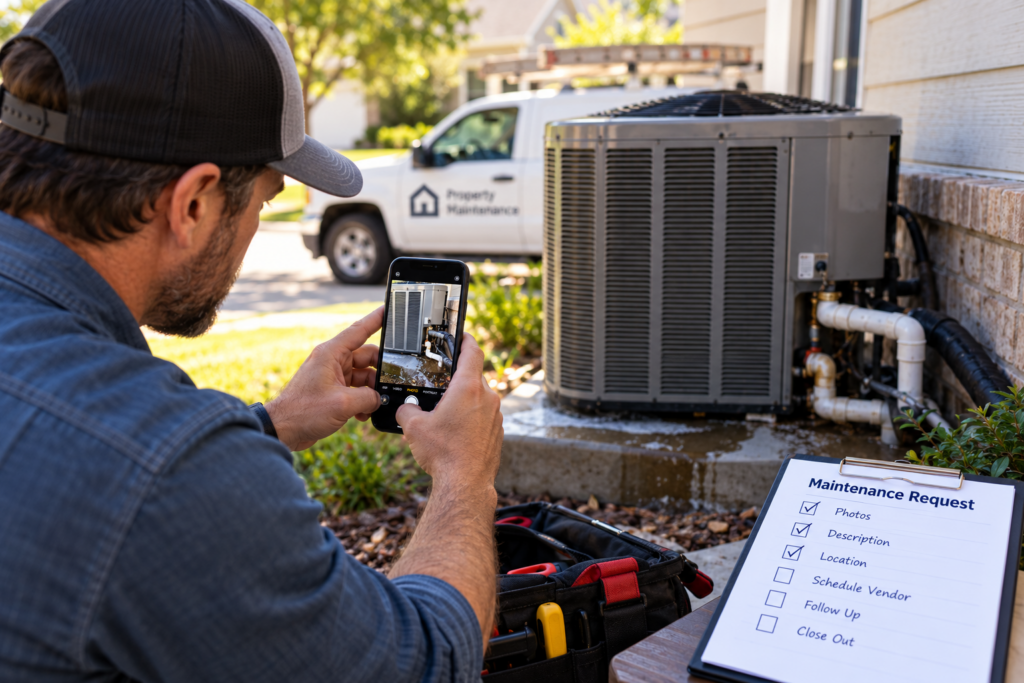
The real value of a repair request system shows up months later. One invoice tells you what happened once. A repair history tells you what keeps happening.
Maybe the same main drain has been cleared three times. Maybe one irrigation zone keeps breaking. Maybe a water heater has needed repeated valve work in an area with heavy mineral buildup. Maybe an older air conditioning system has generated several increasingly expensive calls over two summers. Those patterns help you decide when another service call is reasonable and when it may be time for a deeper inspection, a camera, a replacement quote, or a different vendor.
The history also helps with budgeting. Instead of seeing one large annual maintenance number, you can see which property and which system are driving the cost. For a landlord with only a few houses, that information matters because one problem property can distort the cash flow of the entire portfolio.
Review that history at least a few times a year, not only when tax time arrives. Before summer, look for repeated cooling and condensate calls. After the hottest months, look for irrigation repairs, plumbing leaks, and equipment that needed more than one visit. After a hard freeze or strong storm, look at which houses generated emergency work and whether the same weak points showed up again. A short review can turn old invoices into a practical list of what deserves preventive attention next season.
Keep the System Small Enough to Use
Do not build a maintenance process that requires an hour of administration for a ten minute repair. A small landlord usually needs only a clear intake method, a simple priority, a vendor assignment, a next action date, a final cost, and a note confirming the repair is complete. Photos and invoices can live in the property folder.
The best system is the one you actually use when you are busy. If every request has one home, one next step, and one clear ending, very little falls through the cracks. That is what Maintenance Matters is really about. Not perfect houses and not zero repair calls. It is about catching problems earlier, making better decisions, and keeping a small maintenance workload from turning into constant chaos.