




This Content Is Only For Subscribers
If you own a few rental houses, there is a good chance the work follows you home. You may have a day job, a family, and a property or two that were supposed to create long term income. Then Tuesday night turns into a call about the garbage disposal, Saturday morning becomes a fence repair, and somewhere in between you are trying to remember which tenant asked about a renewal.
Welcome back to “Ask a Property Manager.” This month we are talking about one of the most common problems I see with small landlords: the feeling that there is always something you should have already handled.
That feeling usually comes from running the properties one problem at a time. You answer the newest text, deal with the newest repair, and move on until the next thing pops up. It works for a while, but it gets harder as the portfolio grows.
The landlords who seem the calmest are not the ones with perfect properties or tenants who never call. They usually have a few simple routines that tell them what to do when rent is late, a repair comes in, a lease is ending, or a vendor needs to be scheduled. That is really what an operating manual is: a set of habits you do not have to reinvent every week.
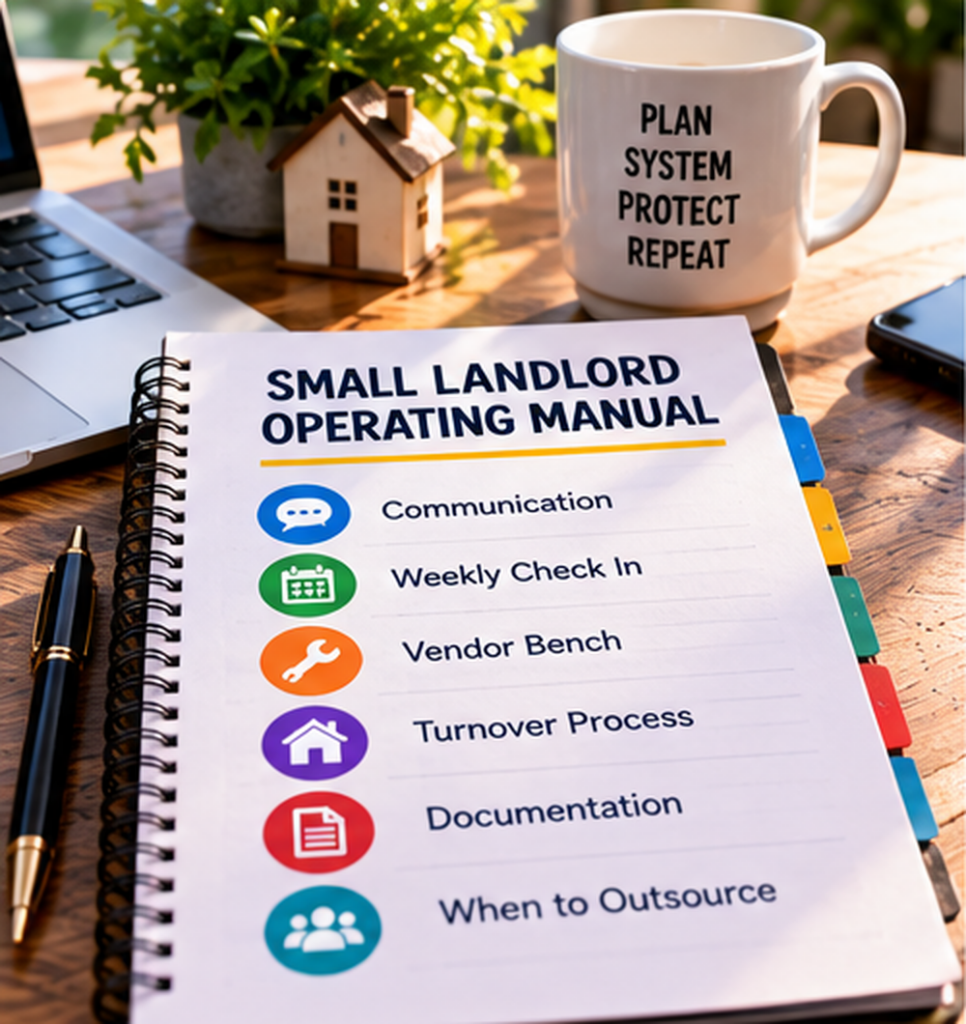
The Myth of Passive Income
Rental property can produce passive income, but managing it yourself is not passive work. You are still handling customer service, maintenance, bookkeeping, vendors, renewals, inspections, and all the small decisions that come with owning the house.
With one rental, you can sometimes keep most of that in your head. With three or five, it gets harder. A San Antonio summer makes the point quickly. If two AC systems are struggling, a tenant is moving out, and another lease is coming up for renewal, memory is not a management system.
You do not need a giant policy binder. You need a simple way to handle the things that repeat. The goal is to make ordinary decisions easier so you have more attention available when something unusual actually happens.
Step 1: Establish Communication Boundaries
Start with communication. Small landlords often become overwhelmed because every tenant message arrives on the same personal phone they use for family, work, and everything else.
Give the rental business its own lane.
A dedicated business number is an easy place to start. It can still ring on the phone you already carry, but it gives you business hours, a separate voicemail, and a cleaner record of tenant calls and texts. A routine request about a dripping faucet can wait for the next business period. A real emergency should follow the emergency instructions you have already provided.
Move non emergency maintenance into writing as well. A tenant portal, email address, or simple online form can all work. What matters is that repair requests stop disappearing inside long text threads and become something you can track from report to completion.
Once tenants know where to call, where to submit repairs, and what counts as urgent, the amount of random communication usually drops. Clear systems are easier for tenants too.
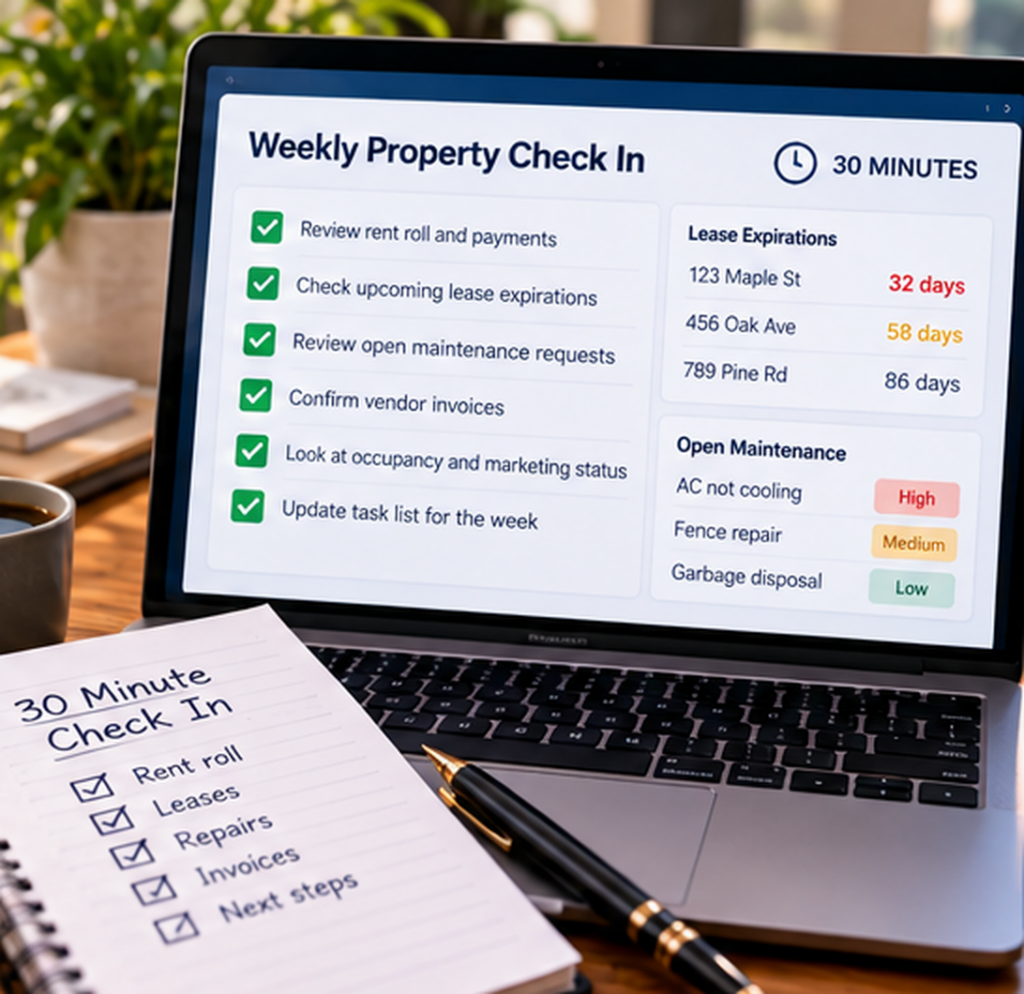
Step 2: The Weekly 30 Minute Check In
Next, give yourself one short appointment with the portfolio every week. Thirty minutes is enough for a small landlord if you are consistent.
Pick a time you can actually keep. Sunday evening, Monday morning, or a quiet lunch hour all work. During that time, do not answer tenant messages. Review the business.
Check the rent roll. Look at the next few lease expirations. Review open repairs. Look for vendor invoices that still need to be paid. Make a short list of what needs to happen before the next check in.
This is not glamorous work, but it prevents a surprising number of problems. A renewal does not sneak up on you. A repair does not sit open for a week because you assumed the vendor finished it. A balance does not go unnoticed because nobody looked at the ledger.
Step 3: Build Your Vendor Bench
The next system is your vendor bench. Do not wait until water is on the floor or the AC stops cooling to figure out who you trust.
For most small landlords, the core list is straightforward: a plumber, HVAC company, electrician, and dependable general repair person. For the critical trades, try to have a backup. South Texas heat, storms, and the occasional freeze can make every good vendor busy at the same time.
Build the list locally. A landlord with rentals in San Antonio may need different coverage than someone with houses farther toward Seguin, Floresville, or another South Texas community. Ask what areas vendors serve, whether they work with tenants directly for scheduling, and how they handle urgent calls.
Once you find good people, make yourself a good client. Pay promptly. Send clear work orders. Be reachable when a decision is needed. Reliable vendors are hard to replace, and the relationship matters most when everybody else is calling them too.
Step 4: Standardize Your Turnover Process
Turnovers are another place where small landlords lose time because they treat every move out as a brand new event. Most of the work is actually predictable.
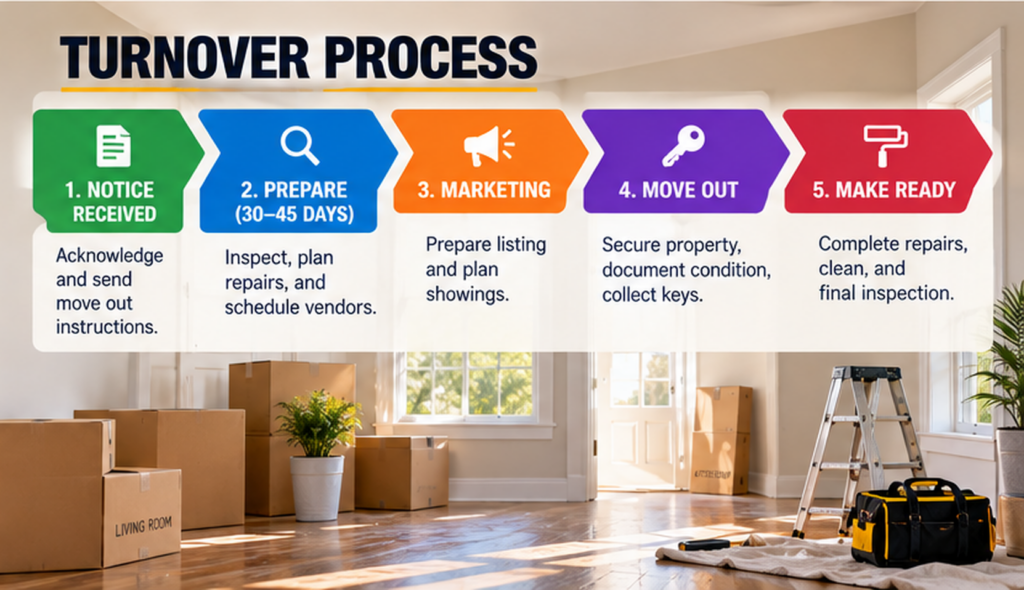
Create one turnover checklist and use it every time. Start when notice is received, not after the tenant leaves. The checklist should cover communication, inspection, vendor scheduling, marketing, make ready work, cleaning, utilities, keys, and the final condition record.
A simple timeline might look like this:
• Day 1: Acknowledge the tenant’s notice and send your move out instructions.
• About 30 to 45 days before move out: Look for larger repairs that may need advance scheduling and begin planning the make ready.
• Before vacancy: Prepare marketing material and decide when the property will be shown based on your normal process.
• Move out day: Secure the property, document condition, collect keys, and start the work that was already scheduled.
• After repairs and cleaning: Do the final quality check before the next tenant takes possession.
The exact timing will depend on the lease, the property, and your market. The benefit comes from having the steps written down before turnover week arrives. You spend less time deciding what comes next and more time making sure the work is actually done.
Step 5: Document Everything
Documentation is another basic system that pays for itself. Small landlords get into trouble when important conversations live only in phone calls and property condition lives only in memory.
After a conversation about rent, access, a repair, or a lease issue, send a short written recap. Take thorough photos at move in and move out. Keep invoices and repair records in one place. Use file names you can understand six months later.
Good documentation is not about preparing for a fight with the tenant. Most of the time it does the opposite. When there is a question, both sides have something concrete to look at. That usually keeps the conversation shorter and calmer.
Step 6: Know When to Outsource
The last part of the operating manual is knowing what you should stop doing yourself. Small landlords can waste a surprising amount of time trying to save a small amount of money.
There is nothing wrong with painting a room or doing yard work if you enjoy it and have the time. But if a Saturday repair keeps you from your family, your job, or a higher value task, the cheap option may not really be cheap.
Decide which jobs you want to keep and which ones should automatically go to a vendor. The goal is not to outsource everything. The goal is to use your time where it matters most.
The Bottom Line
A small rental portfolio does not need to feel like a second job that is always behind. Give communication a clear channel, review the portfolio once a week, build the vendor list before the emergency, use the same turnover process every time, and document the things that matter. The point is to make the ordinary parts predictable and easier to live with.