



Small landlords often receive repair requests in whatever way is easiest for the tenant. One tenant sends a text. Another leaves a voicemail. Someone else mentions it while you are already at the house. That flexibility feels harmless until you are trying to remember which bathroom had the slow leak, whether the tenant said the ceiling stain was growing, or whether the plumber was allowed to enter while the tenant was at work.
A simple repair request form fixes most of that confusion. It gives the tenant one clear place to describe the problem and gives you enough information to decide what happens next. For a landlord with a few houses in San Antonio or South Texas, it just needs to capture the details you would otherwise spend the next hour asking for one message at a time.
Start With the Basics
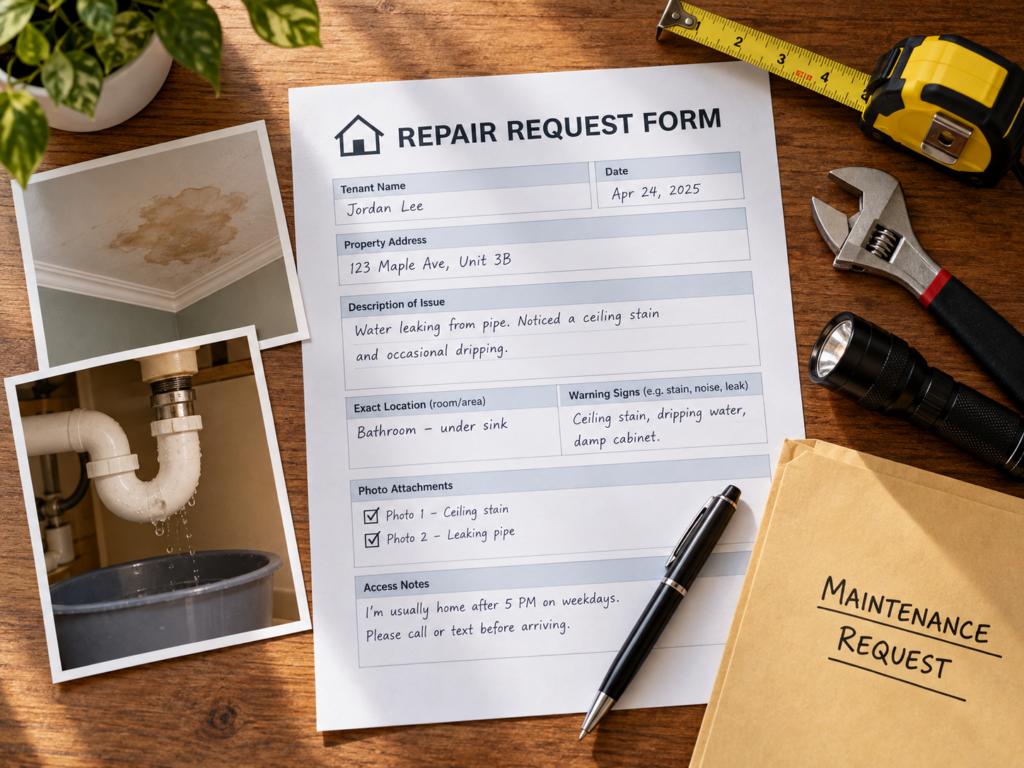
Every request should include the tenant name, property address, date of submission, and a plain description of what is happening. Ask the tenant to describe what they see, hear, smell, or feel instead of trying to diagnose the repair. A message that says the kitchen sink drains slowly, gurgles, and smells like sewage gives a plumber much more useful information than a message that says the sink is broken.
Add a field for the exact location inside or outside the house. Kitchen, hall bathroom, garage, back patio, attic access area, and outdoor condenser are all more useful than simply writing plumbing or air conditioning. If you own several houses, this small detail can prevent a vendor from walking into the wrong room and asking the tenant to explain the whole problem again.
Ask About Related Warning Signs
One of the most useful questions on the form is whether the tenant has noticed anything else connected to the problem. Water stains, unusual sounds, burning smells, repeated breaker trips, warm air from the vents, standing water near indoor HVAC equipment, or a toilet that keeps running can change how quickly you need to respond.
This matters in San Antonio and South Texas because heat and water problems can move quickly. A weak air conditioning complaint in May may be a routine service call. The same complaint during a long stretch of extreme heat deserves a faster look. A small drip under a sink may be manageable for a short period, but a cabinet floor that is already swelling or a stain spreading into the wall tells you the problem has been there longer than the tenant may realize.
Use Photos to Save a Trip
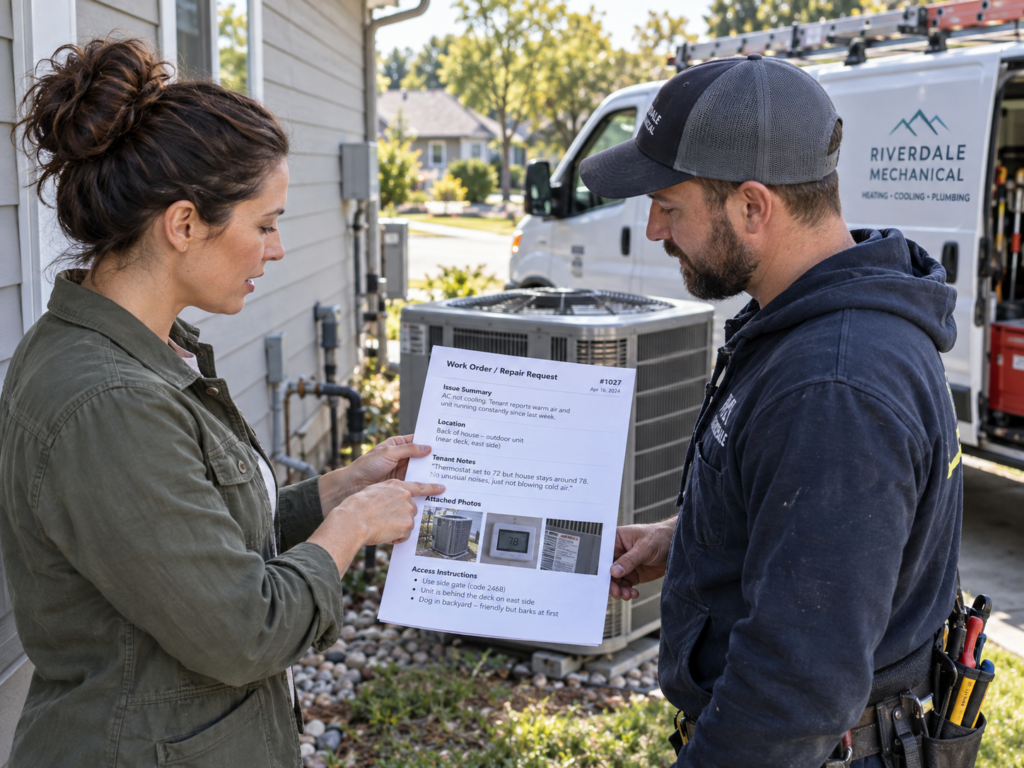
Give the tenant an easy way to attach photos. A picture of a leaking supply line, damaged fence, ceiling stain, irrigation break, or thermostat display can help you send the right trade the first time. Photos are especially helpful when a vendor is traveling from San Antonio to New Braunfels, Seguin, Boerne, or another surrounding community and a second trip means another service charge and another day of delay.
Photos are not a substitute for a qualified diagnosis. They are simply a better starting point. They can help you tell the difference between a loose handle and a broken valve, or between a small roof stain and active water entering the house after a thunderstorm.
Include Access and Scheduling Information
The form should also ask when the tenant is normally available and whether they have any access instructions you need to know before scheduling. A dog in the yard, a locked side gate, a home office call schedule, or a tenant who works nights can turn a simple service visit into a wasted trip if the vendor does not know about it.
You can also ask whether the tenant is comfortable with a vendor entering when they are not home. That helps with scheduling, but the lease and applicable law still control entry and notice. The form is there to organize the visit.
Make the Form the Primary Channel
For most small landlords, a simple online form, dedicated maintenance email, or property management portal works well. Put the link in the move in information and keep it easy to find. When a tenant sends a routine repair by text, you can respond with the link and ask them to submit it so the details stay together.
Use some common sense with emergencies. If a tenant calls because water is actively flooding the house, do not make them stop and complete a form before you act. Handle the immediate problem first, then create the written record yourself or have the tenant submit the details once the situation is stable. The system should make maintenance easier, not get in the way of protecting the property.
A Better Maintenance Record
The biggest benefit is consistency. You know when the issue was reported, what the tenant observed, which property is involved, what photos were supplied, and what access issues may affect the visit. From there, you can add the vendor, appointment date, invoice, and final tenant confirmation to the same record.
That gives a small landlord something much more useful than a phone full of scattered messages. It gives you a history of the house. Over time, that history starts showing patterns, such as repeated condensate problems, mineral buildup around the same plumbing fixture, irrigation leaks in one section of the yard, or an appliance that keeps generating service calls. A good form does not repair the house for you. It simply makes it much harder for an important detail to disappear.