


September 2026
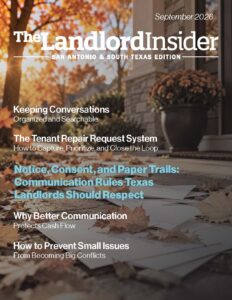
Some of the biggest problems between landlords and tenants do not begin as big problems.
They start with a repair that was never followed up on, a phone call nobody documented, a tenant who is not sure whether their message was received, or a simple question that gets a different answer depending on the day. Individually, those moments may seem minor. But when communication is unclear or inconsistent, small misunderstandings have a way of becoming larger and more expensive than they ever needed to be.
That is why this September issue is focused on communication and the systems behind it.
In **The Tenant Communication Playbook: How to Prevent Small Issues From Becoming Big Conflicts**, we look at the everyday habits that can make landlord-tenant communication easier on both sides. Being responsive does not mean being available every hour of the day. It means setting expectations, keeping important conversations in writing, following up when you say you will, and creating a process tenants can understand from the beginning.
That matters even more in San Antonio and South Texas, where a long cooling season, storms, irrigation issues, and properties spread across a large geographic area can make repair communication especially important. A tenant should know how to report a problem, when they can expect a response, and what happens next. A landlord should be able to look back later and see exactly what was reported and how it was handled.
Maintenance is where those communication systems get tested most often. **The Tenant Repair Request System: How to Capture, Prioritize, and Close the Loop** focuses on building a process that follows a repair from the first tenant report all the way through completion. A good system should capture the right information, help determine how urgently the problem needs attention, keep the vendor and tenant informed, and confirm that the original issue was actually resolved. For a landlord with only a few houses, that does not require a complicated work-order department. It requires consistency.
There are also times when communication becomes more than customer service. In **Notice, Consent, and Paper Trails: Communication Rules Texas Landlords Should Respect**, we look at the difference between a routine message, a lease-controlled notice, and a communication that has a specific legal job. Entry notices, repair requests, payment arrangements, security-deposit records, lease changes, and eviction notices do not all follow the same rules. Knowing when the lease controls, when Texas law controls, and when good documentation is simply smart business can prevent a lot of unnecessary risk.
Communication also has a financial side. **Tenant Experience as an Investment Strategy: Why Better Communication Protects Cash Flow** looks at tenant relationships through the lens of the property itself. Turnover, vacancy, make-ready expenses, delayed maintenance, and owner time all affect the return on a rental. A good tenant experience does not mean saying yes to every request or avoiding rent increases. It means creating a predictable process where tenants know what to expect and small problems are less likely to become expensive ones.
For a San Antonio landlord, that may mean keeping an HVAC request moving during a busy heat stretch. For a property farther toward New Braunfels, Seguin, Boerne, or another South Texas community, it may mean setting realistic expectations around vendor travel and scheduling. Clear updates may not make the repair happen faster, but they can keep a routine inconvenience from becoming a larger source of frustration.
Finally, **Messaging Tools for Small Landlords: Keeping Conversations Organized and Searchable** looks at the technology that can support all of this. A dedicated business number, organized email account, maintenance form, tenant portal, or property management platform can make communication easier to manage, but the tool is only useful if the process behind it makes sense. The goal is not to create another inbox to check. It is to give important conversations one clear place to live so you can find them when you need them.
The common thread throughout this issue is predictability.
Tenants should know how to contact their landlord, what happens after they report a problem, and when they can expect an update. Landlords should be able to find an important conversation without digging through months of personal text messages or trying to remember what was said on a phone call.
You will never eliminate every disagreement, delayed repair, uncomfortable conversation, or unexpected problem. That is part of owning rental property. But clear expectations, good documentation, consistent follow-up, and a communication system you actually use can keep many small issues from becoming much larger ones.
We hope this issue gives you a few practical ideas for making those conversations easier and your rental business a little more organized in the process.
Justin Bass
Editor