




Texting is hard to beat for speed. A tenant already knows how to use it, the message usually gets seen quickly, and it works well when the issue is simple. A portal or dedicated email takes a little more structure, but it gives important conversations a clear home. For a small landlord, the question is not which one should replace the other. The better question is what job each channel should handle.
The problem starts when every channel is treated the same. A repair request arrives by personal text, a payment question lands in email, a vendor update sits in a portal, and the final answer gets sent from another number. Six months later, you remember the conversation but cannot tell where the complete record lives. That is when a convenient communication setup becomes an administrative problem.
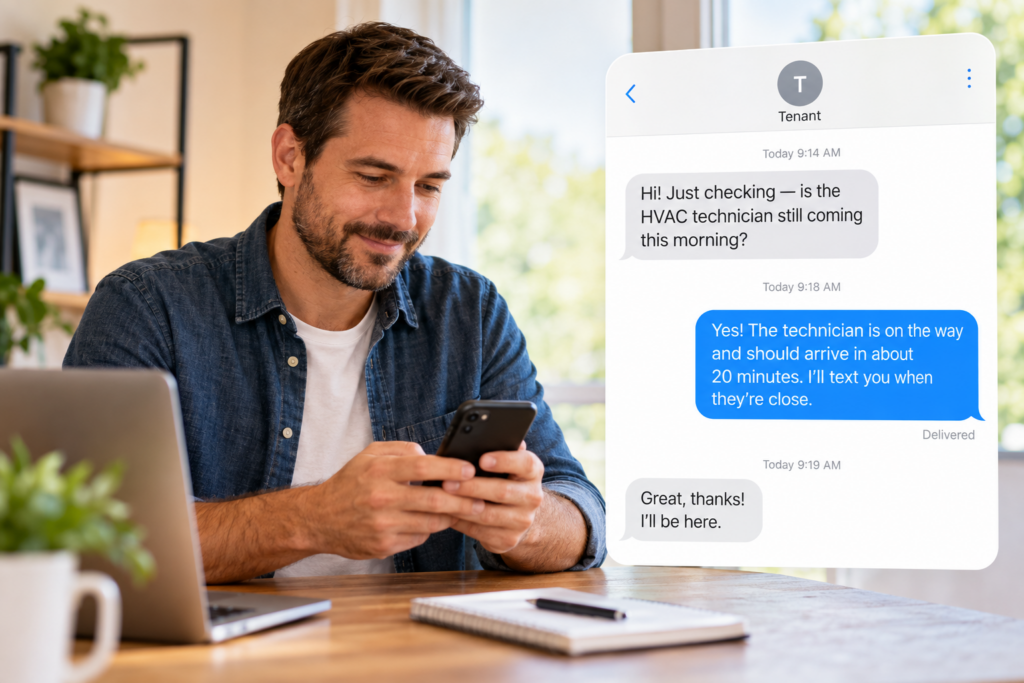
What Texting Does Well
Texting works best for short logistical updates. If an HVAC technician is twenty minutes away from a San Antonio rental, a quick text to the tenant is useful. If a walkthrough is running late, a text is fine. If a pest control visit was already scheduled and documented, a short reminder the morning of the appointment can save everyone a missed trip.
I also like a separate business number for this kind of communication. It keeps rental messages out of the same thread as family conversations and personal photos, and it makes it easier to maintain business hours. The phone can still ring on the device you already carry. The important part is that the tenant has a business contact instead of your entire personal communication life.
Where landlords get into trouble is using a quick text for something that deserves more thought. A payment arrangement, a disagreement about responsibility, a lease question, or a repair history can become difficult to reconstruct if the conversation is buried inside months of casual messages. Text can still be part of the conversation, but the important terms should be confirmed in the channel you use for permanent records.
What a Portal or Dedicated Email Does Well
A portal, maintenance form, or dedicated business email is better for information that needs structure. A good repair request should tell you what is wrong, where it is happening, when it started, whether water or electricity is involved, whether the tenant can provide photos, and how access should be handled. A text that says the AC is acting weird does not give you much to work with during a July heat stretch.
For San Antonio and South Texas rentals, that structure matters because the same house may generate very different problems during the year. A summer cooling issue, an irrigation leak, a water heater problem in mineral heavy water, or a roof concern after a thunderstorm all require different vendors and different follow up. A structured request gives you enough detail to send the right person the first time.
The same idea applies to agreements and important policy questions. If you make an exception, approve a change, or clarify a responsibility, confirm it in a searchable business record. For formal legal notices, follow the lease and the delivery method required for that notice. A portal can help organize records, but it does not replace a legal delivery requirement.
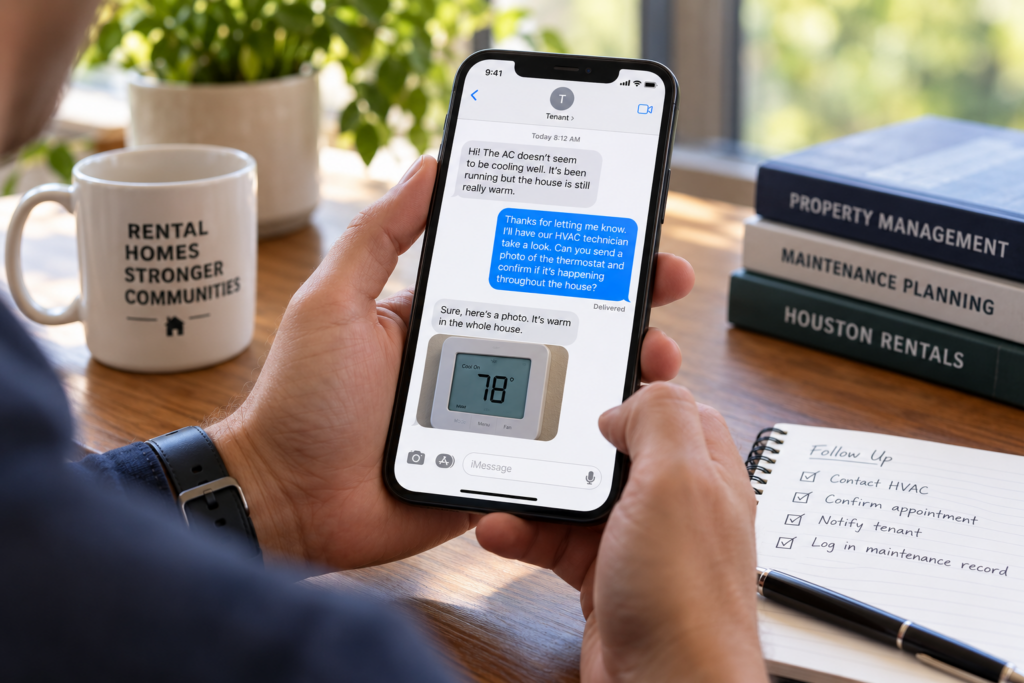
Give Every Channel a Job
The simplest system is to decide in advance what belongs where. I would use the business text line for short scheduling and arrival updates. I would use the maintenance form or portal for repair requests. I would use a dedicated business email or portal for agreements, payment questions, renewal conversations, and other messages that may matter later. Then I would explain that system in the tenant welcome material.
If a tenant sends a routine repair by text, redirect it politely and help them use the process. If the message describes an active leak, electrical danger, gas concern, or another issue that may require immediate attention, do not delay action just to make the tenant fill out a form first. Handle the urgent problem, then make sure the details are logged in the proper record afterward.
A small landlord does not need one giant platform to communicate well. You need clear lanes. Text when speed is the point. Use a structured channel when the record matters. Once tenants know which tool is used for which job, communication becomes easier to find, easier to manage, and much less dependent on your memory.