



This Content Is Only For Subscribers
Drive northeast out of San Antonio on Interstate 35 and the line between suburb, military community and fast-growing regional city starts to blur. Schertz and Cibolo sit side by side along that corridor, and for renters, homeowners and landlords, they often function as one connected market.
Schertz is the larger and more established of the two, with neighborhoods stretching across a broad area near I-35, FM 3009, FM 78 and Randolph Air Force Base. Cibolo sits immediately to the east and has spent much of the past two decades filling former ranchland and open fields with subdivisions, schools, retail and new roads.
Together, the two cities had an estimated population of just under 85,000 residents in 2025. The U.S. Census Bureau estimated Schertz at 45,978 residents and Cibolo at 39,019. Cibolo has been growing particularly quickly, increasing about 20.9% from its 2020 population base through 2025, while Schertz grew about 9.1% over the same period.
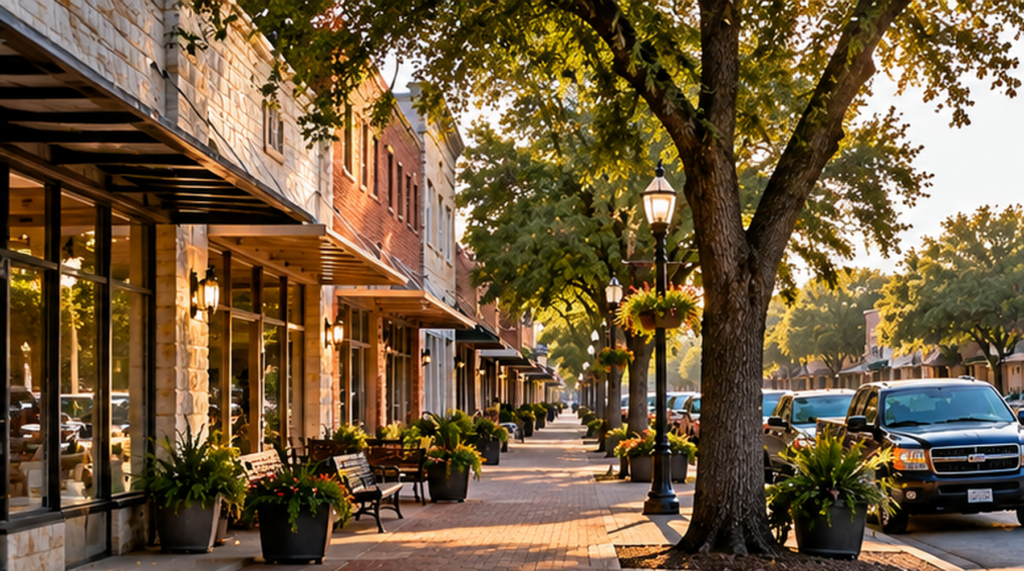
That growth has created a rental market that feels different from many older San Antonio suburbs. There are established neighborhoods with mature trees and older homes, but there are also large sections of relatively new construction where entire streets and subdivisions have appeared within the past decade.
For landlords, that gives the Schertz-Cibolo area a broad tenant pool. Military families, commuters, healthcare workers, manufacturing employees, teachers and households looking for newer suburban housing all overlap here.
Jobs in Schertz-Cibolo
Location is one of the biggest reasons the Schertz-Cibolo area continues to grow.
Interstate 35 provides a direct route into San Antonio while also connecting residents north toward New Braunfels and the Austin corridor. Interstate 10 is nearby, and Loop 1604 provides access around the San Antonio metro. That combination has made the area valuable for both commuters and employers.
Schertz has developed a particularly strong manufacturing, warehouse and distribution economy. Major companies with operations in the city include Amazon, FedEx, UPS, Sysco and Caterpillar, along with dozens of smaller manufacturing and logistics businesses. The Schertz Economic Development Corporation says the city has more than 8 million square feet of planned or completed industrial space and draws workers from a regional labor shed of roughly 750,000 people.
That employment base matters for rental housing because many residents are not necessarily commuting all the way into downtown San Antonio every day. Distribution centers, industrial facilities, healthcare businesses, schools, retail operations and professional-service companies have created employment much closer to home.
The military is another major piece of the local economy.
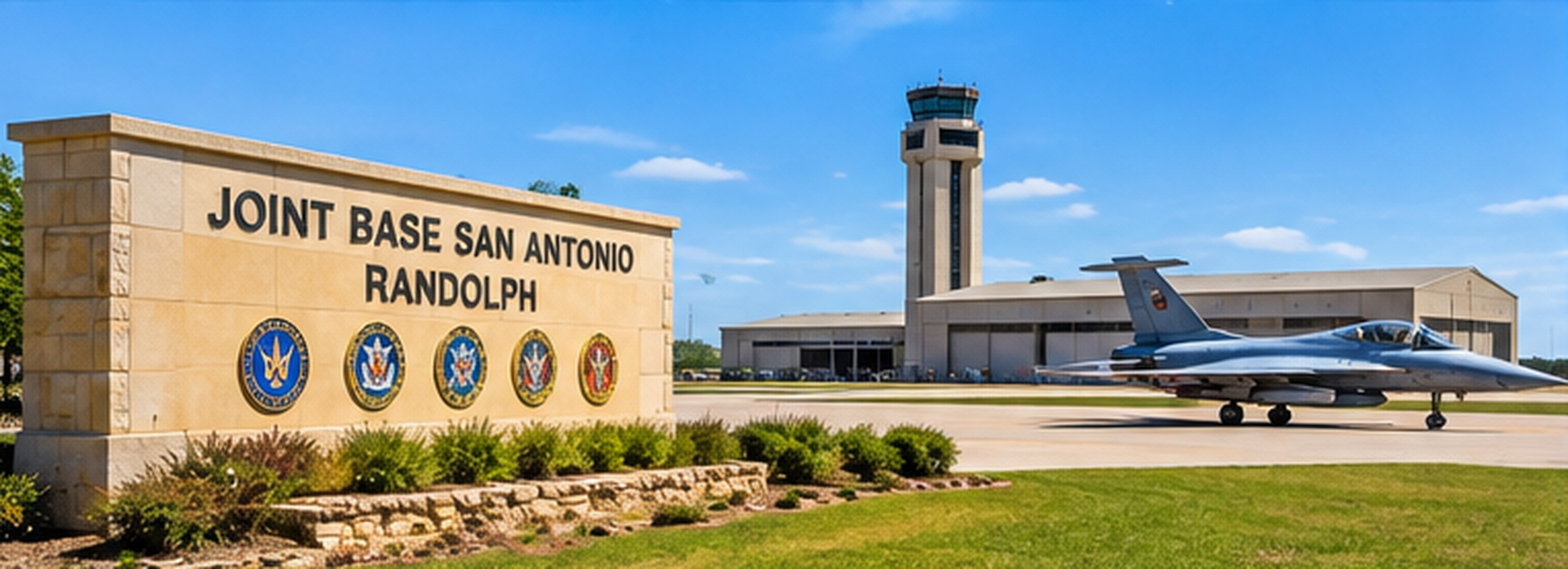
Joint Base San Antonio-Randolph sits immediately west of the Schertz-Cibolo area and is one of the four primary locations that make up Joint Base San Antonio. Across all of JBSA, roughly 70,000 members support military training, flying, healthcare, cyber, intelligence and other missions.
That proximity gives the area a substantial military presence. Census data counted 6,951 veterans in Schertz and 5,654 in Cibolo during the 2020-2024 period.
Cibolo remains more residential than Schertz, but its economic base is also changing as commercial and industrial development moves farther east along the corridor. The broader Guadalupe County economy has added significant manufacturing employment, creating another source of jobs between San Antonio, Cibolo, Seguin and New Braunfels.
Education in Schertz-Cibolo
Much of Schertz and Cibolo is served by Schertz-Cibolo-Universal City Independent School District, commonly shortened to SCUC ISD.
The district serves roughly 15,000 students across the northeast San Antonio area. During the 2025-26 school year, district enrollment was reported at around 15,000 students, and the district’s own long-range planning has been evaluating how new housing construction, charter schools and changing enrollment patterns may affect future campus needs.
The two best-known traditional high schools are Samuel Clemens High School in Schertz and Byron P. Steele II High School in Cibolo. The district also operates elementary, intermediate and junior-high campuses throughout the area.
One unusual part of the district’s demographics is the size of its military-connected population. A recent district planning document reported that more than one-third of students were military connected, which reflects the area’s relationship with Randolph and the wider San Antonio military community.
Landlords should still verify school assignments for an individual property instead of relying on the city name alone. Schertz covers a large geographic area, and school boundaries around fast-growing communities can become more complicated as new neighborhoods and campuses are added.
For higher education, residents are close to several options throughout the San Antonio-New Braunfels corridor. Alamo Colleges operates campuses across the metro, while Texas State University in San Marcos and Northeast Lakeview College in Universal City are accessible from the area.
Quality of Life in Schertz-Cibolo
Schertz and Cibolo are suburban communities, but neither feels completely built over.
Schertz maintains more than 30 parks, athletic fields and recreation facilities, ranging from small neighborhood parks to large natural areas.
One of the standouts is Crescent Bend Nature Park, a 180-acre property along Cibolo Creek with hiking and biking trails, bird blinds, picnic areas and fishing access. It gives residents a much more natural setting than the standard subdivision playground and serves as a reminder that the creek corridor still runs through a large part of the area’s identity.
Pickrell Park is closer to the center of Schertz and functions more like a traditional community park, with an outdoor pool, basketball, walking trails, playgrounds and picnic facilities.

Cibolo has its own neighborhood park system. Schlather Park includes walking trails, a large playground, picnic areas and disc golf, while Niemietz Park, one of the city’s older recreation spaces, provides additional play and gathering areas. The city has also been working toward a broader network of trails and green space as residential development continues.
The area’s geography is another advantage. New Braunfels is a relatively easy trip north on I-35, while San Antonio’s major attractions, employment centers and entertainment districts remain accessible to the south. Residents can live in a quieter suburban neighborhood without feeling completely disconnected from the larger metro.
The tradeoff is traffic. Growth along I-35, FM 3009 and the roads feeding newer Cibolo subdivisions has increased congestion, and ongoing highway construction can change commute patterns from year to year.
Shopping, Dining and Entertainment in Schertz-Cibolo
Retail development has followed the rooftops.
The Schertz side of the market has the larger concentration of established shopping, particularly around I-35 and FM 3009. The nearby Forum at Olympia Parkway in Selma gives residents access to a large collection of national retailers, restaurants and services only a few minutes from many Schertz neighborhoods.
Newer commercial projects are adding more options closer to home.
Schertz Station, near I-35 and Cibolo Valley Drive, is being developed as a roughly 257,000-square-foot retail and dining center. The project began welcoming tenants in 2025 and is designed to bring additional restaurants and national retailers to one of the busiest parts of the Schertz-Cibolo corridor.
Cibolo has a different commercial personality.
Along Main Street in Old Town Cibolo, smaller restaurants and local businesses create a setting that feels removed from the major highway retail corridor. City planning efforts have looked at expanding downtown with additional commercial space, public gathering areas, trails and mixed-use development while maintaining the historic core.
The combination gives residents two very different options within a short drive: large suburban retail around I-35 and a smaller historic district closer to the center of Cibolo.
For landlords, commercial growth can matter almost as much as the number of new houses being built. Renters generally notice when groceries, restaurants, schools and everyday services become easier to reach, particularly in neighborhoods that once felt well outside the developed part of the metro.
Cost of Living in Schertz-Cibolo
Schertz and Cibolo are similar geographically, but their housing numbers show some differences.
In Schertz, the Census Bureau reported a median owner-occupied home value of $317,100 for 2020-2024. Cibolo’s figure was higher at $351,900. Owner occupancy was also high in both communities, at 78.4% in Schertz and 82.3% in Cibolo.
That high ownership rate means single-family rentals operate inside communities where many neighboring homes are owner occupied. For small landlords, that can make property condition, landscaping and neighborhood standards particularly noticeable.
Census median gross rent was $1,659 in Schertz and $2,112 in Cibolo during the same 2020-2024 period. Those figures include certain utility expenses and should not be read as the current asking rent for a specific three-bedroom house, but they do show that the two cities occupy somewhat different price points within the same general rental market.
Household incomes are relatively strong. Median household income was $99,948 in Schertz and $122,365 in Cibolo, according to the Census Bureau.
For rental owners, property age can make a significant difference.
An older house near central Schertz may have a lower acquisition cost but require more attention to HVAC systems, plumbing, roofing or electrical components. A newer house in Cibolo may come with fewer immediate maintenance concerns but face competition from newly built homes and other recent subdivisions.
That difference is one reason the Schertz-Cibolo market should be evaluated property by property rather than treated as one uniform suburb.

Other Notable Facts About Schertz-Cibolo
Both cities were shaped by agriculture and the railroad long before they became San Antonio suburbs.
The Schertz community traces its roots to the Schertz family, German-speaking immigrants who arrived in Texas during the 1840s. Sebastian Schertz eventually settled in the area and built a farming and business operation. The community was originally known as Cut-Off, and the arrival of the Galveston, Harrisburg and San Antonio Railroad in the 1870s helped turn the settlement into a more permanent town. It officially became known as Schertz in 1899 and incorporated as a city in 1958.
Cibolo developed around the same railroad corridor. The name comes from a word associated with buffalo, and the railroad station serving the community was once known as Cibolo Valley. A post office opened in the 1880s, and by 1890 the settlement had a church, cotton gin, general store and about 100 residents. Cibolo incorporated in 1965.
Today, the railroad, farms and open prairie have largely given way to neighborhoods, warehouses, schools and commercial projects, but pieces of the older communities are still visible along Schertz’s Main Street and Cibolo’s historic core.
The most striking part of the story is how quickly the scale has changed. Cibolo had only 15,349 residents in 2010. By 2025, the estimate had climbed above 39,000. Schertz grew from 31,465 residents in 2010 to nearly 46,000 over the same period.
For rental owners, that growth brings opportunity along with competition. New homes continue to enter the market, but so do new employers, retailers and households. A well-kept rental with a practical commute and sensible pricing can appeal to a very broad group of tenants here.
Schertz and Cibolo may sit outside San Antonio’s city limits, but they no longer feel like distant satellite towns. They have become a substantial rental market of their own.