




This Content Is Only For Subscribers
Vendor delays are part of owning rental property. Parts get ordered, technicians get pulled into larger jobs, and a contractor who promised Tuesday suddenly calls and says Friday is the best they can do. In San Antonio and South Texas, the problem becomes especially noticeable during the hottest part of summer, after a strong thunderstorm, or during the first hard freeze when half the area seems to need the same trade at once.
The delay itself is not always something you can control. The communication around it is. A tenant who knows what is happening will usually handle a reasonable delay much better than a tenant who has heard nothing for four days and has started wondering whether the request was forgotten.
Tell the Tenant Before They Have to Ask
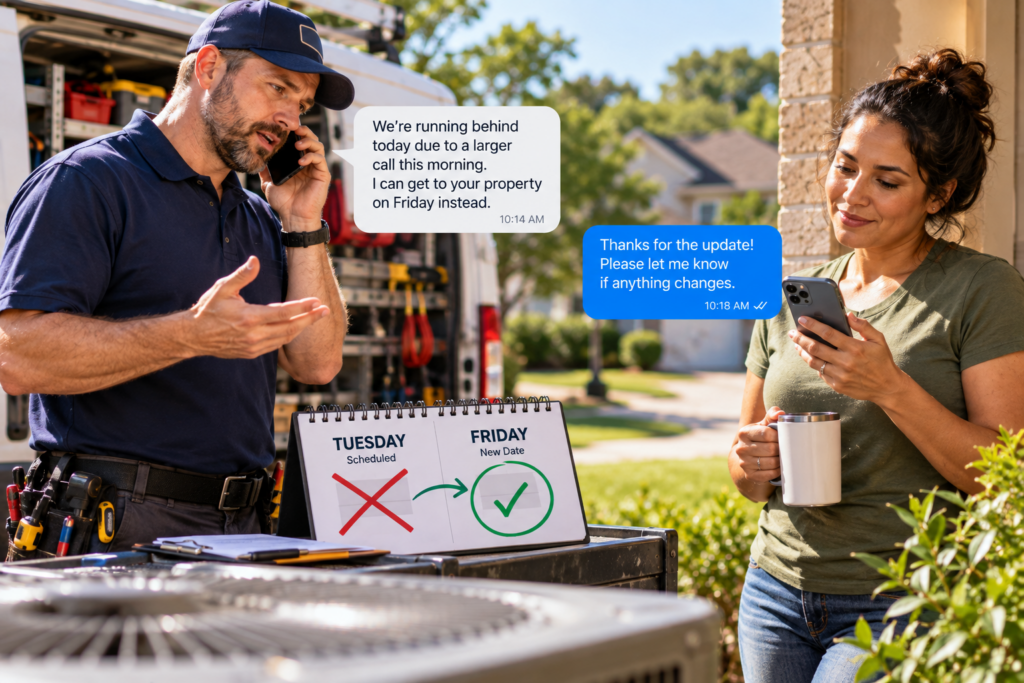
As soon as you know the original schedule is slipping, send an update. You do not need to wait until you have a perfect answer. It is better to say that the technician cannot make the original appointment and that you are working on a new date than to go silent while you call five companies.
Keep the message simple. A useful update might say: ‘I wanted to give you an update on the refrigerator repair. The technician who was scheduled for tomorrow had to move the appointment. I am checking with another company this afternoon and will update you again by 4 p.m. tomorrow, even if I do not have the final appointment yet.’
That message does three things. It confirms that you remember the problem, explains what changed, and gives the tenant a specific time when they will hear from you again.
Do Not Promise What the Vendor Has Not Confirmed
One of the easiest ways to make a delay worse is to promise a completion date you do not control. If the HVAC company says they hope to have a motor by Thursday, do not tell the tenant the system will be fixed Thursday. Tell them the part is expected Thursday and that you will confirm the installation schedule once the vendor has it in hand.
This is especially important when a part is coming from outside the area or when the property is in New Braunfels, Seguin, Boerne, Pleasanton, or another community where the vendor may be combining several service calls into one route. A realistic update is more useful than an optimistic promise that gets broken twice.
Give the Next Update Time
A delay message should always end with the next communication point. Avoid vague lines such as ‘I will let you know when I hear something.’ Give the tenant a day or time instead. ‘I will check back with the plumber tomorrow morning and update you by noon’ gives the tenant something concrete and gives you a reminder to follow through.
If the vendor misses that new deadline, send another update before the tenant has to ask. You may feel repetitive, but silence creates more frustration than a short message saying the part still has not arrived.

Urgent Repairs Need More Than an Update
The approach changes when the delayed repair affects safety, active property damage, sanitation, security, or extreme indoor conditions. A delayed fence board is mostly a scheduling problem. A burst pipe, sewage backup, or rapidly heating house after a complete cooling failure requires you to think about what can be done while the primary vendor is delayed.
That may mean calling a second vendor, shutting off water to stop damage, arranging temporary cooling where appropriate, moving food from a failed refrigerator, or giving the tenant clear instructions about what not to use until the repair is complete. The right temporary step depends on the actual condition. Avoid one size fits all promises, but do not let a scheduling delay become an excuse for doing nothing when the property is at risk.
Keep the Record Together
Save the delay updates with the original repair request. Note when the vendor was scheduled, what changed, what the tenant was told, and when the new appointment was confirmed. If the same company repeatedly misses appointments or leaves you explaining delays to tenants, the repair log gives you a good reason to start building another vendor relationship.
Good maintenance communication is not about pretending every repair will happen immediately. It is about making sure the tenant is never left guessing. A clear update, a realistic next step, and a promise you can actually keep will usually protect the relationship far better than an overly confident timeline that falls apart.