




This Content Is Only For Subscribers
Every self managing landlord eventually has the same evening. You are eating dinner and a tenant texts about a loose cabinet handle. Ten minutes later they ask whether a guest can park in the driveway. Then another message comes in asking when the air filter should be changed.
None of those questions are unreasonable. They also do not need an answer at 9:30 at night.
Welcome back to “Ask a Property Manager.” Today we are talking about office hours, and more importantly, how to set them without making tenants feel like they cannot reach you when something really matters.

Availability Is Not the Same as Service
A lot of small landlords think good service means answering every message as soon as it arrives. I do not. Good service means the tenant knows how to reach you, knows when you will respond, and trusts that you will follow through.
If you answer every routine text immediately, you accidentally train the tenant to expect immediate answers. That may work when you own one house and have a quiet month. It becomes much harder when work gets busy, your family needs your attention, or two properties have repairs at the same time.
Office hours give the rental business a normal rhythm. You can still be responsive without allowing every routine question to interrupt the rest of your life.
Frame It as a Response Standard
The wording matters. I would not tell a tenant, “Do not contact me after 6 PM.” That sounds like a wall. I would say, “My normal business hours are Monday through Friday from 9 AM to 6 PM. Routine messages are answered during those hours, usually within one business day.”
That tells the tenant what they can expect instead of focusing on what they cannot do. It also gives you a standard you need to meet. If you say one business day, follow through.
Create a Separate Emergency Path
Office hours only work if the tenant knows what to do when something cannot wait. An active water leak, gas odor, electrical hazard, serious security issue, or another condition that is actively threatening safety or property should have a clear emergency path.
San Antonio summers also make it important to explain how you want cooling problems reported. A minor thermostat question and a total system failure during extreme heat are not the same situation. The tenant should know which channel to use, and you should avoid making them guess when the house may be unsafe or damage may be occurring.
You can use the same phone with a separate business number, an emergency extension, or a dedicated line. The exact tool matters less than making the instructions easy to find.
Put the Hours Everywhere
I like office hours in the welcome message, email signature, tenant portal, and voicemail greeting. If the tenant has seen the same information in several places, the boundary feels normal rather than personal.
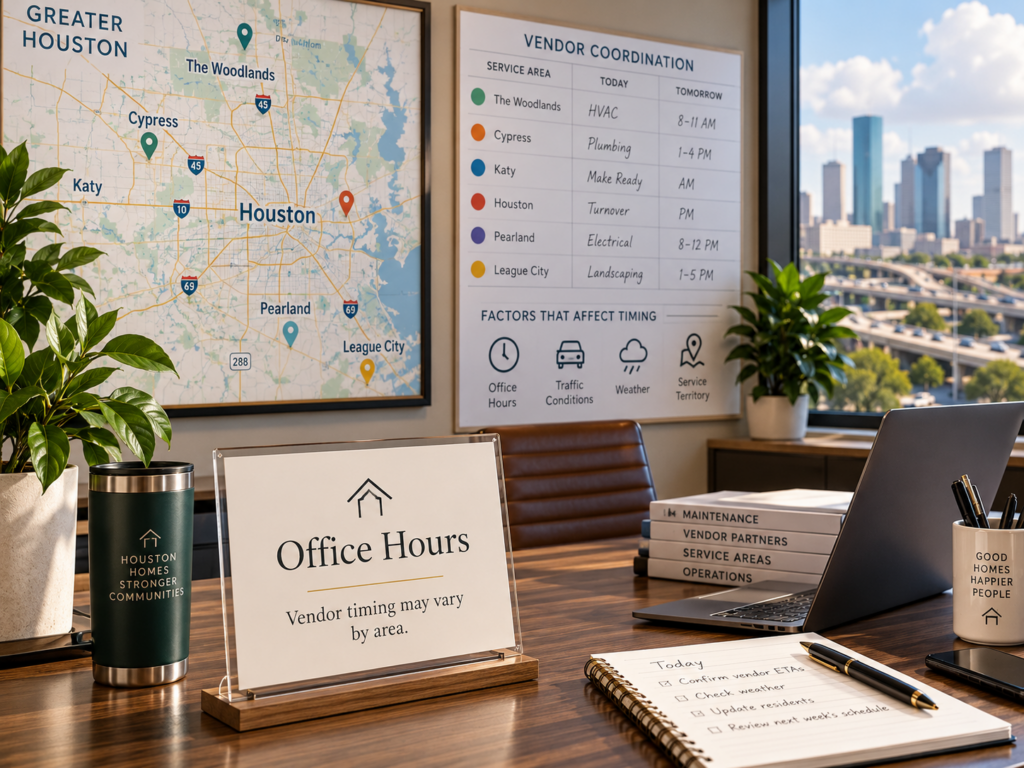
For rentals outside the core San Antonio area, you may also want to explain that vendor scheduling can depend on travel and availability. A plumber driving to Seguin or an HVAC company covering New Braunfels may not arrive on the same schedule as a vendor working ten minutes away. That is not an excuse for poor communication. It is a reason to give realistic updates.
The same rule helps with ordinary scheduling too. If a tenant asks for a non urgent inspection time or wants to discuss a renewal, give them a business hour window instead of trying to handle it through scattered evening texts. That keeps simple coordination from becoming an all day interruption.
Do Not Break Your Own Rule Every Night
This is where landlords undo their own system. They announce office hours and then continue answering every non urgent text at 10 PM. The tenant learns quickly that the posted hours are optional.
If you happen to see a routine message after hours, leave it until the next business period. Emergencies are different. Routine questions can wait.
Setting office hours is not about becoming harder to reach. It is about becoming more predictable. Tenants usually do well with boundaries when the landlord communicates them clearly and follows them consistently. You get your evenings back, and the tenant gets a landlord who is more focused and less irritated when it is actually time to handle the business.