




This Content Is Only For Subscribers
Most landlord tenant conflicts do not begin as major problems. They begin as a small repair that was never updated, a rent question answered too casually, a phone call nobody documented, or a tenant who thought silence meant they were being ignored.
Welcome back to “Ask a Property Manager.” This month we are talking about tenant communication, which is one of the least glamorous parts of managing rentals and one of the biggest reasons some landlords feel calm while others feel like every conversation is turning into a fight.
I have managed enough tenant conversations to know that you cannot prevent every disagreement. You can, however, prevent a surprising number of them by being clear before the problem starts, keeping your tone steady when someone is upset, and making sure important conversations do not disappear into memory.

Start With Professional Distance
The first rule is simple: be friendly, but remember that you are running a business. You do not need to be cold. You also do not need to become the tenant’s friend.
New landlords sometimes try to build goodwill by being endlessly flexible. They text casually at all hours, waive a fee because the tenant had a bad week, and make verbal exceptions they do not write down. The relationship feels easy until the landlord has to enforce the lease. Then the tenant may feel like the rules suddenly changed.
Professional distance solves much of that. Be respectful. Learn the tenant’s name. Respond when you say you will. But make important decisions based on the lease and your normal process, not on whether the conversation feels friendly that day.
A separate business number helps. So do normal business hours, a dedicated maintenance channel, and professional language in texts and emails. Those small choices tell the tenant that there is a system behind the property.
Make the First Message Count
The best time to explain your communication system is at move in, before anyone is frustrated.
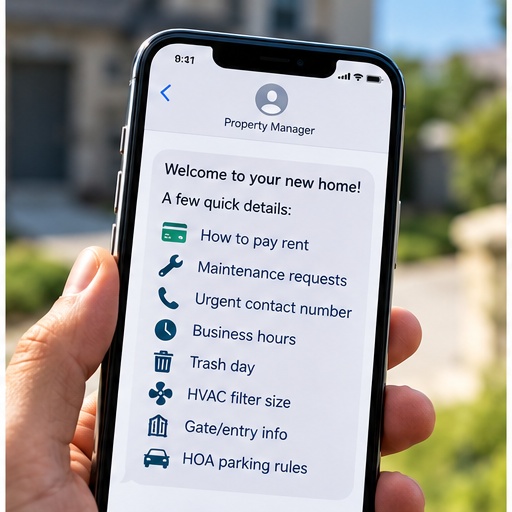
Your welcome message should explain how rent is paid, where maintenance requests go, what number is used for urgent issues, your normal business hours, and any house specific details the tenant needs right away. The goal is not to rewrite the lease. The goal is to remove the most common reasons a new tenant has to guess.
For a San Antonio house, that might include the HVAC filter size, irrigation schedule, trash day, gate instructions, or HOA parking rules. If the home is farther out toward New Braunfels, Seguin, or another surrounding community, explain that vendors may call the tenant directly to coordinate access.
A tenant who knows the process from day one is less likely to invent their own process later.
Put Important Conversations in Writing
I am a big believer in written follow up. Not because every tenant relationship is headed toward a dispute, but because memory gets fuzzy fast.
If a tenant calls about a repair, take the call. Then have them submit the request through your normal written channel, or send a short recap yourself. If you discuss a payment arrangement, access time, lease question, or repair decision by phone, send a brief email or message afterward confirming what was decided.
You do not need a legal memo after every conversation. Two or three sentences can be enough: “Thanks for speaking with me today. As discussed, the plumber will arrive Friday between 10 AM and noon. You confirmed that the vendor may enter during that window.”
Good documentation does more than protect you later. It prevents the argument from starting because both sides can see the same timeline.
Keep One Primary Communication Channel
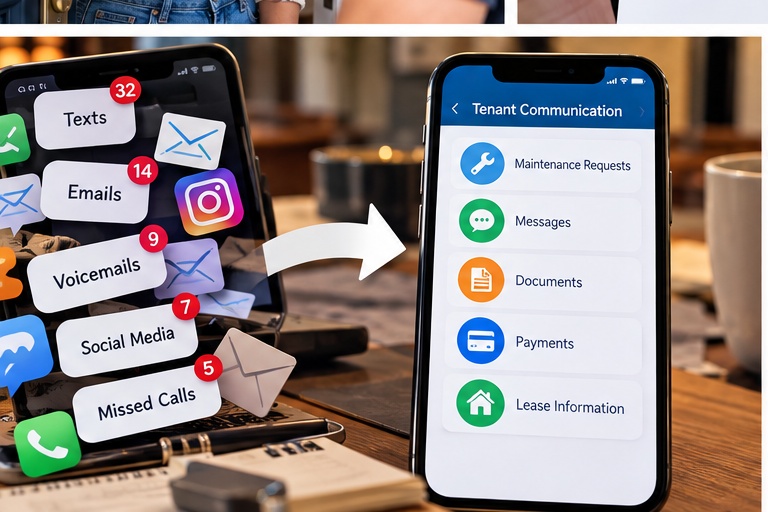
Small landlords get into trouble when tenant communication is scattered across personal texts, email, social media messages, voicemail, and conversations in the driveway. Pick a primary channel for routine business and teach the tenant to use it. You can still answer a phone call, but important follow up should land in the same place you normally keep records.
This is especially helpful when more than one person is involved. A spouse, assistant, property manager, or vendor should not have to search through your personal phone to figure out what the tenant was told. One clear channel makes the history easier to follow and makes handoffs much cleaner when you are unavailable.
Acknowledgment Is Often Enough for the First Reply
One of the easiest ways to frustrate a tenant is to leave them wondering whether you saw the message. This is especially true with maintenance.
You do not have to solve the problem in the first response. You can simply say, “I received this. I am reviewing it and will update you tomorrow morning.” That tells the tenant they were heard and gives you room to make a thoughtful decision.
During a San Antonio summer, this matters even more when the message involves cooling, an active leak, or storm damage. The tenant may be worried about the house and wondering how quickly conditions could get worse. A short acknowledgment does not replace action, but silence adds stress for no reason.
Learn to Say No Without Starting a Fight
Landlords have to say no. A tenant may want to repaint a room, add an animal that is not allowed under the lease, install equipment, waive a charge, or end the lease early. The answer is sometimes going to be no.
I try not to turn a simple no into a lecture. Acknowledge the request, give the answer, and explain the reason briefly. If there is a reasonable alternative, offer it.
For example: “I understand why you are asking. I cannot approve that change under the current lease terms. If you would like, I can review a different option that would not permanently alter the property.”
The tenant may still dislike the answer, but a clear answer is usually easier to accept than a vague one that keeps changing.
Over Communicate During Repairs
Maintenance is where communication earns its keep. Repairs are disruptive. A broken appliance, plumbing leak, cooling problem, or roof issue affects the tenant inside their home, and they often have no visibility into what is happening behind the scenes.
Give three basic updates. First, confirm you received the request. Second, tell them the plan once a vendor is scheduled or a part is ordered. Third, follow up when the work is complete.
If the repair is delayed, tell them before they have to ask. After a major storm or during a heavy summer service period, contractors in San Antonio and surrounding South Texas communities may be booked across a large area. You cannot manufacture a contractor opening that does not exist, but you can give the tenant a realistic timeline and a date for the next update.
I would rather send, “The part is still expected Thursday, and I will update you Thursday morning,” than go quiet for three days because nothing changed.
Set Office Hours and Keep Them
Small landlords burn themselves out by making every tenant message feel immediate. Routine communication should have routine hours.
Tell the tenant when you normally respond and create a separate path for genuine urgent situations. That lets a routine question about parking or a cabinet door wait until business hours while an active leak or safety issue gets the attention it needs.
The hardest part is following your own rule. If you post office hours but answer every routine text at 10 PM, the tenant learns that your real office hours are whenever your phone is on. Consistency is what turns a preference into a boundary.
Handle Angry Tenants Slowly
At some point, a tenant will be upset. Sometimes you will have made a mistake. Sometimes the problem will be outside your control. Either way, matching the tenant’s emotion rarely helps.
Let them explain the complaint. Acknowledge what is frustrating. Then separate what you know from what you can actually do. If the neighbor is the problem, an HOA is involved, or road work has blocked access, say clearly where your authority begins and ends.
Do not argue through a long text thread. Keep the response short and factual. If the conversation becomes abusive, end the call and continue in writing later. Professional communication is a two way expectation.
Use the Same Process With Every Tenant
The most useful communication system is the one you can repeat. Every new tenant gets the same type of welcome message. Every repair gets an acknowledgment, an update, and a closeout. Every important phone conversation gets a written recap. Every routine message follows the same business hours.
That does not make the relationship robotic. It makes it predictable. You can still be flexible when circumstances call for it, but the tenant is not depending on your mood or memory to know what happens next.
For a landlord with only a few houses, this does not require expensive software or a giant policy manual. A business number, email, calendar, simple maintenance system, and a few saved message templates can handle most of it.
What I Want the Tenant to Feel
At the end of the day, I want a tenant to feel three things when they communicate with the landlord: I know how to reach them, I know when I will hear back, and I believe they will do what they said they would do.
That is a much better goal than trying to keep every tenant happy all the time. Some requests will be denied. Some repairs will take longer than anyone wants. Some rent conversations will be uncomfortable. Clear communication does not remove those moments. It keeps them from becoming bigger than they need to be.
If you can stay friendly without becoming casual, document the things that matter, keep tenants updated during repairs, and hold consistent boundaries, most conversations become easier. The best communication system is not the one with the most templates. It is the one that makes the next step obvious to both sides.