




When a landlord ends up in a dispute, the paperwork usually matters as much as the story. If you are standing in a Bexar County Justice Court, answering a demand letter, or simply trying to sort out a disagreement with a tenant, you should not be searching through three email accounts and a desk drawer for the lease. The basic file for that tenancy should be easy to find and easy to understand.
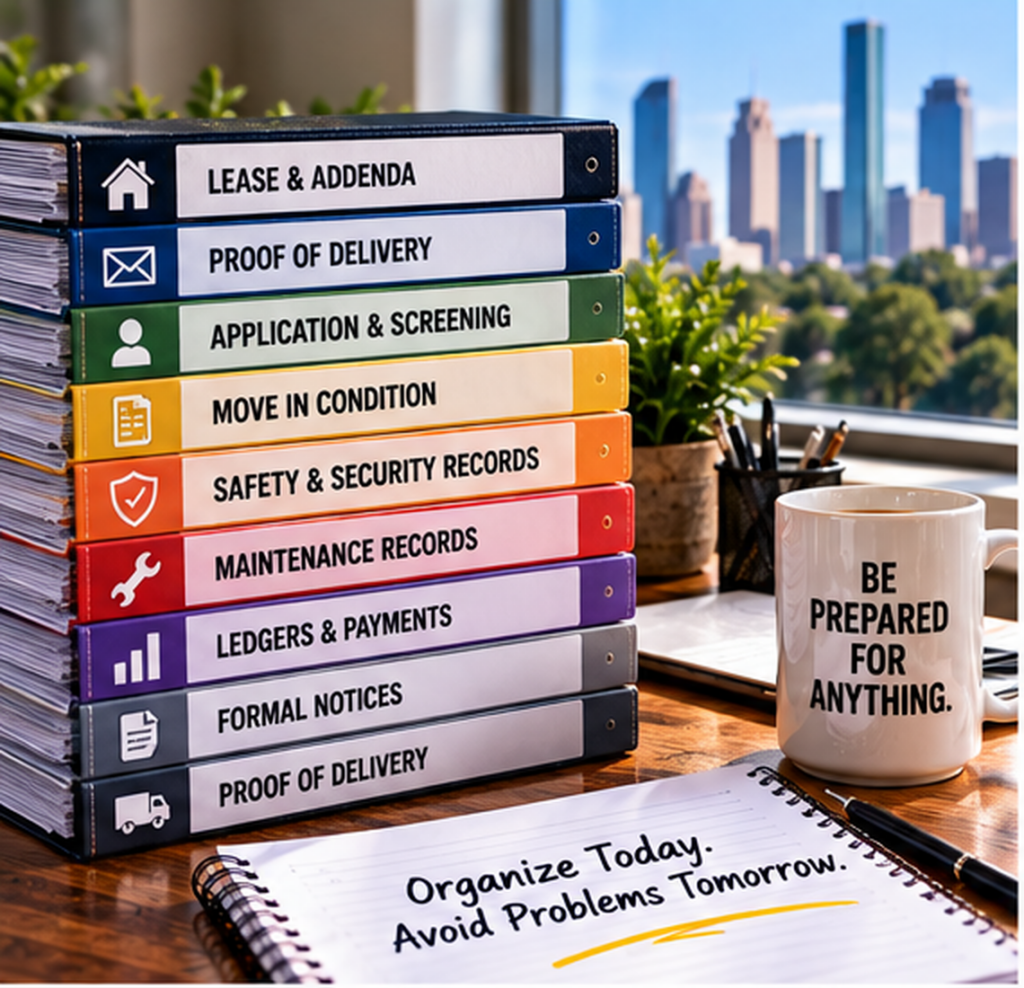
Welcome back to Landlord Legal Lowdown. For San Antonio and South Texas landlords, here are ten records that should be close at hand for every active tenancy.
The Core Tenancy Documents
First, keep the fully executed lease and every signed addendum together. Do not rely on a draft, an unsigned copy, or a lease that is missing the pet, parking, pool, or other addenda that actually govern the tenancy. If the agreement changes during the lease, keep the written amendment with the original lease so the current terms are obvious.
Second, keep proof that the tenant received a complete copy of the lease. Texas Property Code Section 92.024 requires a landlord to provide at least one complete copy to at least one tenant no later than the third business day after the lease has been signed by each party. An email showing delivery, a portal record, or a signed acknowledgment can make that easy to prove later.
Third, keep the original rental application and the records you relied on during screening. That may include the application, screening authorization, income documents, landlord references, and other records used in the approval decision. Keep these records secure because they often contain personal information. If a dispute later develops over what an applicant represented before move in, you want the original file, not your memory of it.
The Condition and Safety Records
Fourth, keep the move in condition record. A signed inventory and condition form is helpful, but photographs and video can be just as important. Texas law does not make one particular form the only way to prove condition. The goal is a clear baseline so you can later distinguish tenant damage from normal wear and tear. In San Antonio, where a house may already show age, settling, sun exposure, or older finishes, that baseline can prevent a deposit dispute from growing.
Fifth, keep a written record of your security device and smoke alarm checks. Texas law has specific security device requirements, and Section 92.258 requires the landlord to determine that required smoke alarms are in good working order at the beginning of possession. During the tenancy, the smoke alarm inspection and repair duty generally follows tenant notice or a request. A dated checklist and vendor records are far better than relying on memory.
Sixth, keep the locksmith invoice or other record showing when required locks were rekeyed. Section 92.156 generally requires keyed security devices to be rekeyed at the landlord’s expense no later than the seventh day after each tenant turnover date. If you use an in house locksmith or maintenance person, create a dated work record that shows what was done.
The Financial and Operational Records
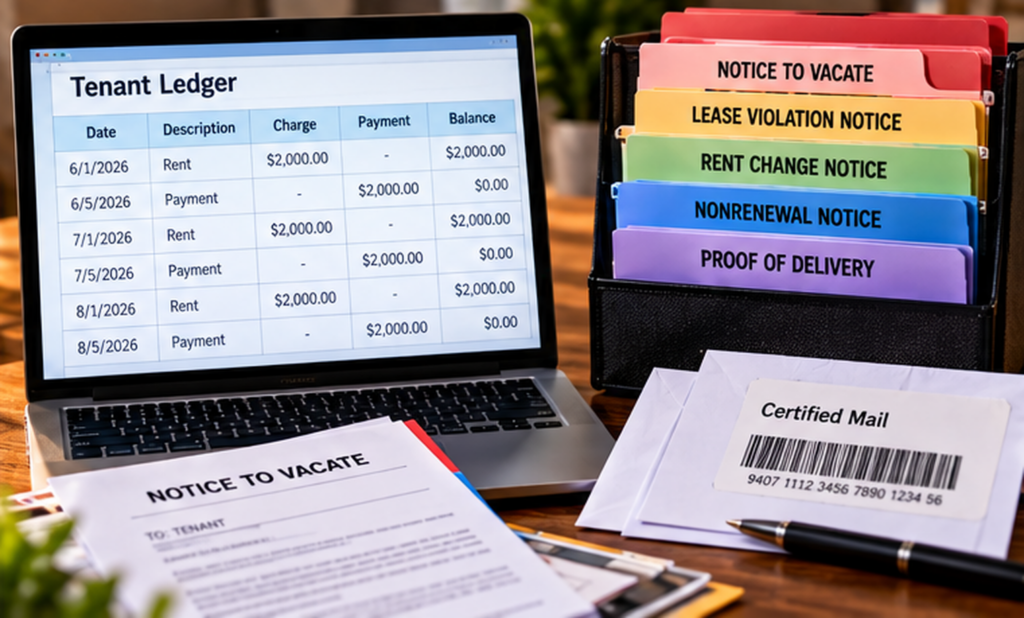
Seventh, keep a current tenant ledger. It should show rent charges, payments, credits, fees, and how partial payments were applied. A clean ledger matters when the account is disputed and is especially useful in a nonpayment case. A Justice Court may not require one particular software format, but a clear accounting is much easier to explain than scattered receipts and bank screenshots.
Eighth, keep a maintenance file that follows each repair from request to completion. Save the tenant notice, your response, vendor communications, work orders, invoices, and useful photographs. Under Section 92.052, a repair notice must be in writing only when the written lease requires written notice. Either way, your file should show what you did and when you did it, especially during a South Texas heat wave when HVAC vendors are booked.
Ninth, keep every formal notice you send to the tenant. That includes notices of lease violations, notices to vacate, nonrenewal notices, rent change notices, and any other notice required by the lease or law. Do not assume that a text message or casual email can replace a formal notice when the lease or statute requires a particular method.
Tenth, keep proof of delivery with the notice itself. For a Notice to Vacate, Texas Property Code Section 24.005 has specific delivery rules. Your file should preserve the evidence that matches the method you actually used, such as mailing records, tracking information, delivery documentation, or a dated record of personal delivery or posting when permitted. The notice and the proof belong together.
The Five Minute Test
Pick one active property this week and see whether you can find these ten items in five minutes. If you cannot, fix the system now, before a Bexar County or South Texas dispute forces you to do it under pressure.