




This Content Is Only For Subscribers
When San Antonio hits another triple-digit afternoon and an air conditioner stops working, the issue can escalate quickly. Summer vendors are already stretched, tenants are uncomfortable, and a landlord’s response can determine whether a difficult repair stays manageable or becomes a larger tenant-relations problem.
Welcome back to Maintenance Matters. This month, we are building a summer emergency repair plan for landlords in San Antonio and South Texas. Hope is not a strategy. You need a documented, repeatable protocol for the problems most likely to happen during peak heat, when vendor availability is tight and delays feel much longer to tenants. Grab your clipboard. Let’s build your playbook.
Defining the Emergency
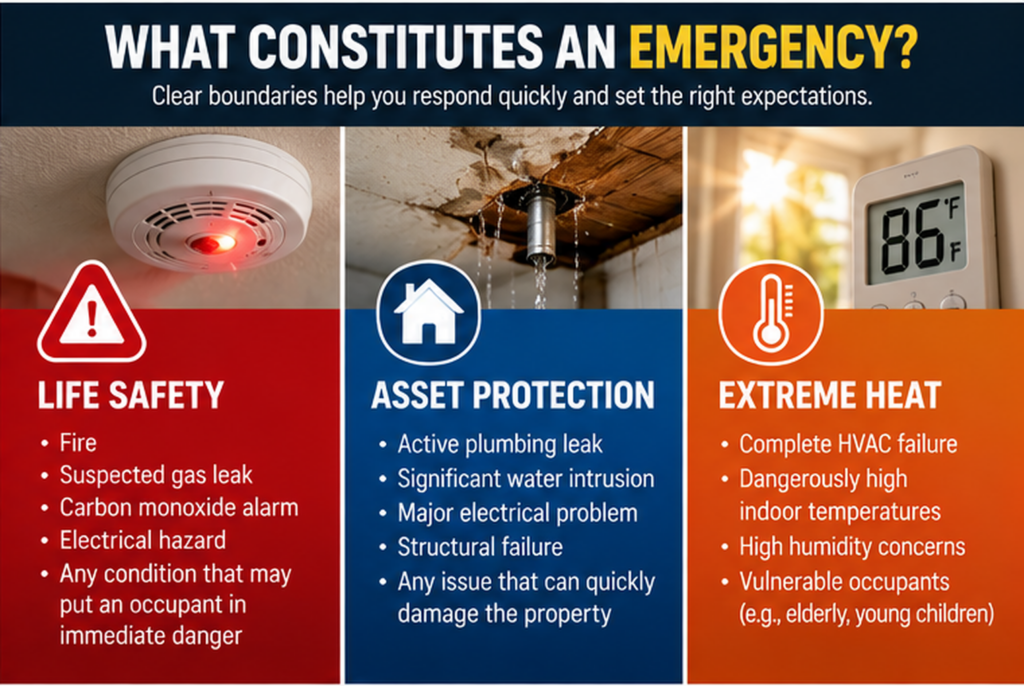
The first step in an emergency repair plan is defining what actually constitutes an emergency. When tenants are hot and uncomfortable, every issue feels urgent to them. You must establish clear, objective boundaries to triage requests and manage expectations.
In a San Antonio and South Texas summer, maintenance emergencies generally fall into a few clear categories:
1. Life Safety: A fire, suspected gas leak, carbon monoxide alarm, electrical hazard, or another condition that may put an occupant in immediate danger.
2. Asset Protection: An active plumbing leak, significant water intrusion, major electrical problem, structural failure, or another issue that can quickly damage the property.
3. Extreme Heat: A complete HVAC failure during dangerous summer conditions, especially when indoor temperatures are climbing or an occupant may be particularly vulnerable. Your written policy should be consistent with the lease and applicable law rather than relying on a one-size-fits-all temperature number.
Everything else, including a dripping faucet, broken dishwasher, or slow-draining sink, may be handled as a standard repair unless the circumstances make it more serious. Communicate your emergency process clearly and remind tenants how to report urgent problems before peak summer. That prevents a Saturday-night maintenance request from becoming chaotic simply because no one knows what happens next.
The Vendor Bench: Deep and Vetted
Your emergency plan is only as strong as the vendors executing it. Relying on one HVAC company in San Antonio is risky during peak heat. When the first major heat wave arrives, reputable technicians may be booked across the metro area and surrounding communities.
Build a deeper bench. For critical systems such as HVAC, plumbing, and electrical, keep multiple vetted vendors on your roster. If your rentals stretch outside San Antonio into surrounding South Texas communities, confirm which companies actually serve each property before you need them.
The Vetting Process
Do not wait until a pipe bursts or an AC stops cooling to find help. Before peak summer, call local companies and ask about emergency coverage, after-hours charges, service areas, typical response times, and priority programs. Verify licensing and insurance when required for the work being performed.
Once you have your bench, program their numbers into your phone and keep a printed list in your office. When an emergency strikes, you don’t have time to read online reviews; you need to start dialing down your list until someone answers.
The Tenant Communication Protocol
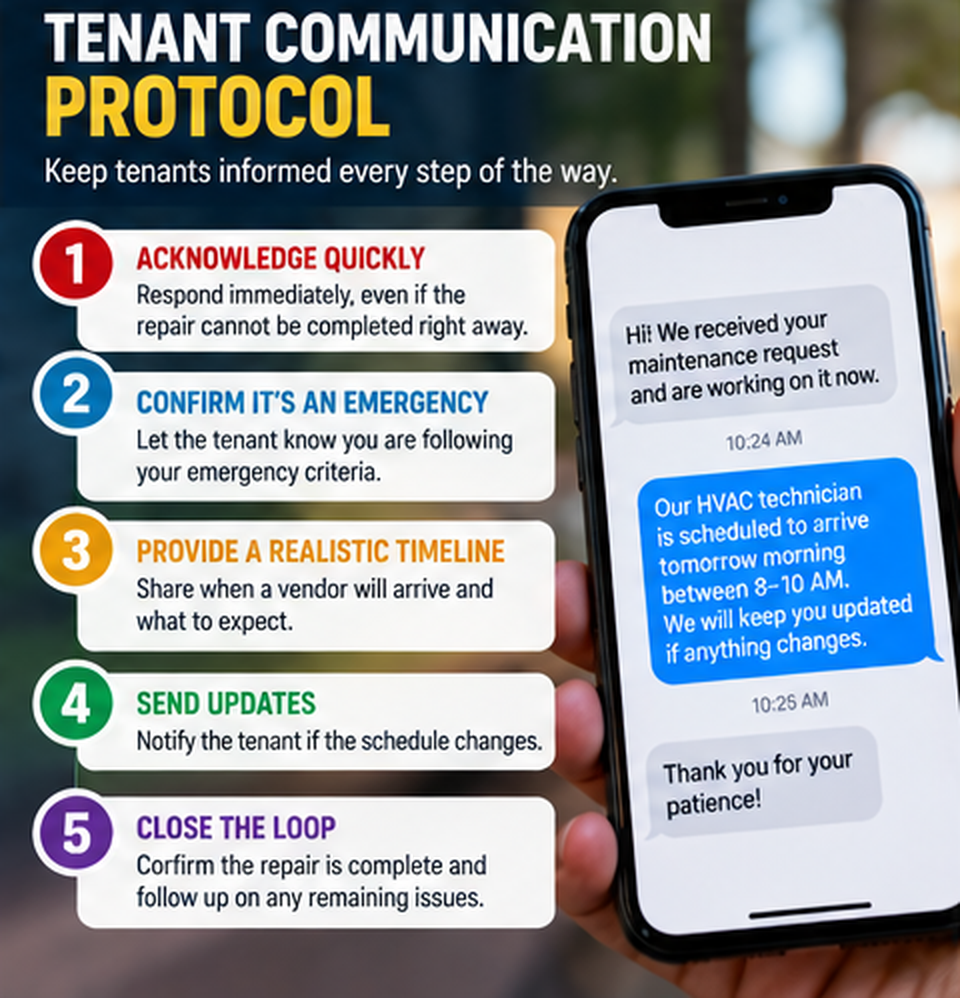
In an emergency, silence breeds panic. Your tenants need to know that you are aware of the problem and actively working to solve it.
The Initial Response
When an emergency ticket comes in, your initial response should be immediate, even if the repair cannot be. Acknowledge the issue, confirm that it meets the criteria for an emergency, and provide a realistic timeline.
If the AC fails on a Sunday and your preferred vendor cannot arrive until Monday morning, tell the tenant immediately and keep them updated if the schedule changes. Do not promise a same-day repair unless you can deliver it. Clear communication matters even more when the outside temperature is near or above 100 degrees.
Temporary Solutions
During extreme heat, plan for temporary relief when appropriate. A portable AC unit can help cool a bedroom or other occupied area while a central system is being repaired. If you keep temporary equipment for emergencies, make sure it is in working order before summer and that tenants receive clear instructions for safe use.
The Post-Emergency Autopsy
Once the emergency is resolved, the water is stopped, and the air is cooling, your job isn’t quite finished. You must conduct a post-emergency autopsy.
Review the event. Did the vendor respond within the expected timeframe? Was the invoice accurate? Most importantly, why did the system fail? In South Texas, recurring causes may include heavy HVAC run time, clogged condensate drains, failed electrical components, leaks, or equipment that simply reached the end of its service life. Use the answer to improve your next inspection.
Use every emergency as a learning opportunity to refine your preventive maintenance process. By defining emergencies clearly, building a strong local vendor bench, communicating consistently, and learning from failures, San Antonio and South Texas landlords can turn summer crises into manageable processes. Your stress goes down, tenants receive a more organized response, and your property is better protected.